
Blog
< Back
Rimkieta’s Little Cinderellas
“Early in the morning I go to fetch water from the fountain. When I get home, I bathe the 8-month-old baby of the aunt with whom I live, then, carrying him on my back, I sweep the house and patio and wash the dishes. Then I go to the market to buy vegetables and I help my aunt cook. In the afternoon when I get home from FAR, I sweep the house again, wash the clothes, and after dinner, I wash the dishes “ (SK, 10 years old).
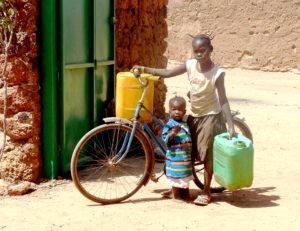
Coming back home, lugging two barrels, taking care of my little cousin
At 6:30 in the morning, when most people start waking up here in Burkina, Rimkieta’s little Cinderellas are wishing they could go back to bed. At this early hour, they have already been to fetch water and lug it home; they’ve done the whole family’s wash and they’ve been to the market and cleaned the house. They’ll spend the rest of the morning taking care of their younger siblings or cousins. At midday they’ll help cook and they’ll wash the dishes. And in the afternoon they’ll return to looking after the young ones and doing the domestic chores until bedtime.
This is the routine for many girls in Burkina, subjected to domestic labor exploitation that here is not considered exploitative… Minors from 6-15 years of age – most from rural areas, orphans, or coming from poor, illiterate families that send their girls to the city to work in the house of some relative or acquaintance – always without access to school and often without appropriate food and care – all for another source of income.
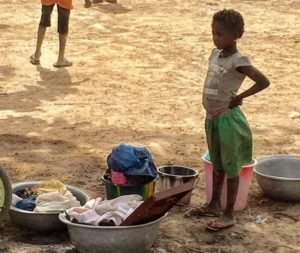
Time to do the laundry
In order to try to protect these girls, FAR came up with the idea for the project “education for unschooled girls.” Each year there are 20 new girls, all with similar stories…. the stories of girls who’ve been robbed of their childhood.
Some stories have happy endings. 9-year-old Lorantine, for example, was enrolled in school this year after the year she spent being taught basic skills at FAR. She is from a desperately poor family: a widowed mother with five children, the eldest of whom is 11, and the youngest, 3. Before entering the FAR program, Lorantine, the only “little woman” among the five siblings – and the one who couldn’t be enrolled in school with her mother’s limited means – was the one who took charge of all the housekeeping and the care of her younger siblings. Once at FAR, after a year of an awareness campaign on our part, we managed to get her mother to reduce her household chores so they were compatible with school. She was a well-behaved girl with a good attitude – sweet and a bit shy – but overnight she started arriving late every day, falling asleep in class and being irritable and even aggressive.
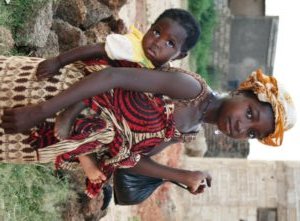
Coming back from the market after buying vegetables to prepare dinner, carrying my little cousin on my back
“I don’t live at home anymore. A few weeks ago they sent me to live with a neighbor woman to do her housework. The woman is good to me, but I don’t want to live with her. I want to be with my mother and brothers. Not with my father, because he’s dead. A few days ago I ran away and went back home but my mother made me go back to that woman’s house because she gives my mother some money for my work so she can feed my brothers”
We immediately went to speak with Lorantine’s mother, who confirmed what the girl had told us. We asked her to consider what was best for the girl, who was notably affected by the separation from her family – doing worse in school and in the dangerous situation of running from one house to another. Her mother refused to bring Lorantine home, defending her decision by her poverty. Since her husband died, she digs up sand under the blazing sun to sell it to make adobe bricks, and tries to feed her five children with the little she earns from this very harsh work. The small amount she got from ceding Lorantine to her neighbor’s house really helped. But with patience, understanding and affection, and after many days trying, we convinced her, and Lorantine has returned home and her behavior in class is back to normal.
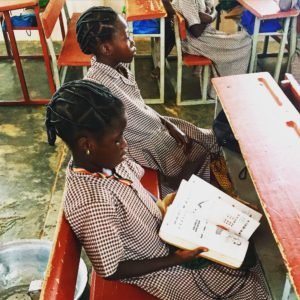
A future at FAR
Lorantine has been luckier than most who find themselves obliged to leave their families to be Cinderellas for some foster family. And when the girls grow up, their future holds nothing more than a forced marriage to some old man… A 2016 UNICEF survey estimates that 51.6% of girls under the age of 17 are forced to marry in Burkina Faso…
The math is straightforward: Girls + education (in schools or in workshops) = educated women who know they can choose = reduction of forced marriages = reduction of underage pregnancies = reduction of births complicated by the mother’s youth = reduction of mortality for mother and child.
The equation, therefore, is simple: “Girls + Education,” which is the goal of the project we are privileged to carry out along with the Women for Africa Foundation. We currently have 112 ‘Lorantines’ in this project, which will have a happy ending without Prince Charming, who, after all, is not necessary for happiness!