Blog
< Back
Deadly Dengue Epidemic in Burkina Faso
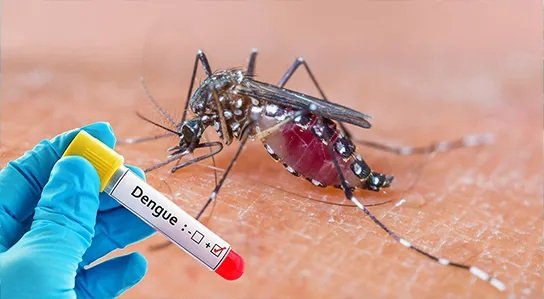
The tiger mosquito that transmits dengue. Photo Omega Stockings
The beginning of the school year in Burkina Faso, which takes place in October, is always accompanied by an increase in requests for healthcare from the children in our projects. This healthcare is part of the overall personalized care that FAR offers to each beneficiary. However, this year, a deadly dengue epidemic has further complicated a situation already complicated by malaria.
The end of the rainy season (May to September) sees a sharp rise in malaria cases. The Anopheles Stephensir mosquito that transmits the disease lays its eggs in any stagnant water. It freely roams the courtyards of homes and streets in Burkina Faso, finding many spots (such as tires and plastic and other waste), to lay its eggs.
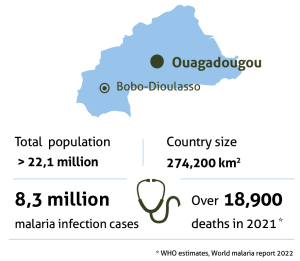
Malaria Burkina Faso in 2021. Photo Target Malaria
Malaria is widespread in Burkina Faso, putting the entire population at risk of infection. The disease accounts for nearly 50% of medical consultations, more than 60% of hospitalizations, and 30% of deaths annually, according to the Ministry of Health. The World Health Organization estimated in 2021 that the country had 8.3 million malaria cases and more than 18,900 deaths attributed to the disease.
This year, the country’s two main urban centers – Ouagadougou (the capital) and Bobo Dioulasso – have recently recorded more than 50,500 suspected cases of dengue. This viral disease, which is fatal in its severe phase, currently has no vaccine or treatment.
Given that the high cost (15€) of the diagnostic test is beyond the means of a large portion of the population, the actual number of potential cases is feared to be significantly higher.
In addition to the more than 200 deaths attributed to dengue in recent weeks — a number that continues to rise daily — there are also cases diagnosed as ‘short-term disease.’ This term is commonly used on death certificates when the cause of death is unknown.
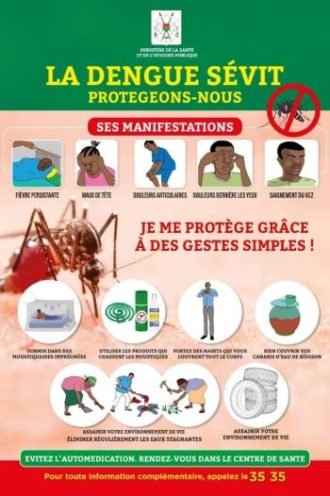
Raising awareness about prevention and protection against dengue. Ministry of Health of Burkina Faso
Against such a backdrop, the Ministry of Health has just declared this year to be the deadliest on record in Burkina Faso, due to an epidemic of this disease, which has always coexisted with malaria, although it has gone largely unnoticed. The maximum number of deaths recorded was 18 in 2017. No study has ever been carried out on this subject, given that dengue was not included among the diseases subject to notification by the Burkinabe health system before 2016.
In response to the situation, we’ve educated the FAR team and the mothers of our beneficiaries about the importance of passive mosquito bite prevention. This includes using repellent, sleeping under mosquito nets, and cleaning patios to eliminate stagnant water as much as possible. We’ve also stressed the critical need to avoid self-medication, as taking ibuprofen, naproxen, or aspirin can increase the risk of bleeding and fatally complicate the disease. The key to dengue treatment is constant hydration (with a mixture of one liter of water, five sugar cubes, a teaspoon of salt, and the juice of one lemon), rest, and paracetamol for pain.
This epidemic poses a significant additional burden for Burkina Faso, a country already grappling with poverty, limited resources, political instability, and a focus on combating terrorism. Despite these challenges, the Ministry of Health has announced plans to fumigate public places to curb the disease’s spread, and to offer free dengue diagnostic tests at health centers.
The epidemic also directly impacts our global assistance budget for FAR project beneficiaries, which includes support and financial aid in case of this illness. Last year in September and October alone, the cost of such assistance was €407. This year, by the third week of October, that amount had already more than doubled (€901).
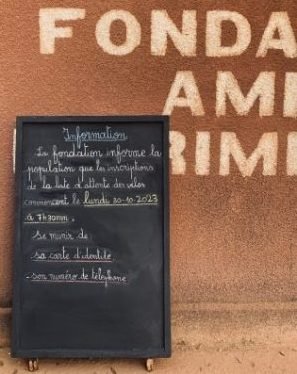
Announcement of opening of the waiting list to request a bicycle
These hardships notwithstanding, we have kicked off the 2023-2024 school year with enthusiasm and energy. We’re serving 450 boys and girls in the maternelle, 160 children in the Education and Reintegration of Street Children project, and 185 girls in the Education for Unschooled Girls project. These students are receiving training at FAR, attending school, or gaining professional skills in workshops. Additionally, we are providing 300 school scholarships and 12 university scholarships. The total includes just more than 1,100 children and young people in training.
Once again, we’re reopening the waiting list for bike applications for our special Christmas delivery, which will facilitate travel for another 500 families.
All of this is possible thanks to your help, affection, and support. Without it, none of this would be achievable here in Rimkieta. Thank you once again. Let’s keep it up!