Blog
< Back
¡Olé Salimata, olé!
September is one of the busiest months at FAR and, without a doubt, the time when I have the privilege of having the most direct contact with our beneficiaries, thanks to the distribution of the school scholarships. It is a close encounter, which is always accompanied by an endless stream of anecdotes that remind me, with renewed strength, why we are in the Rimkieta neighbourhood and why we do what we do.
The school scholarship project begins in 2009, in response to the devastating floods of September of that year, which left hundreds of Rimkieta families with nothing. Much to the regret of the mothers, their children’s schooling was pushed to the last place on their priority list, given the urgent need to rebuild their lives from scratch.
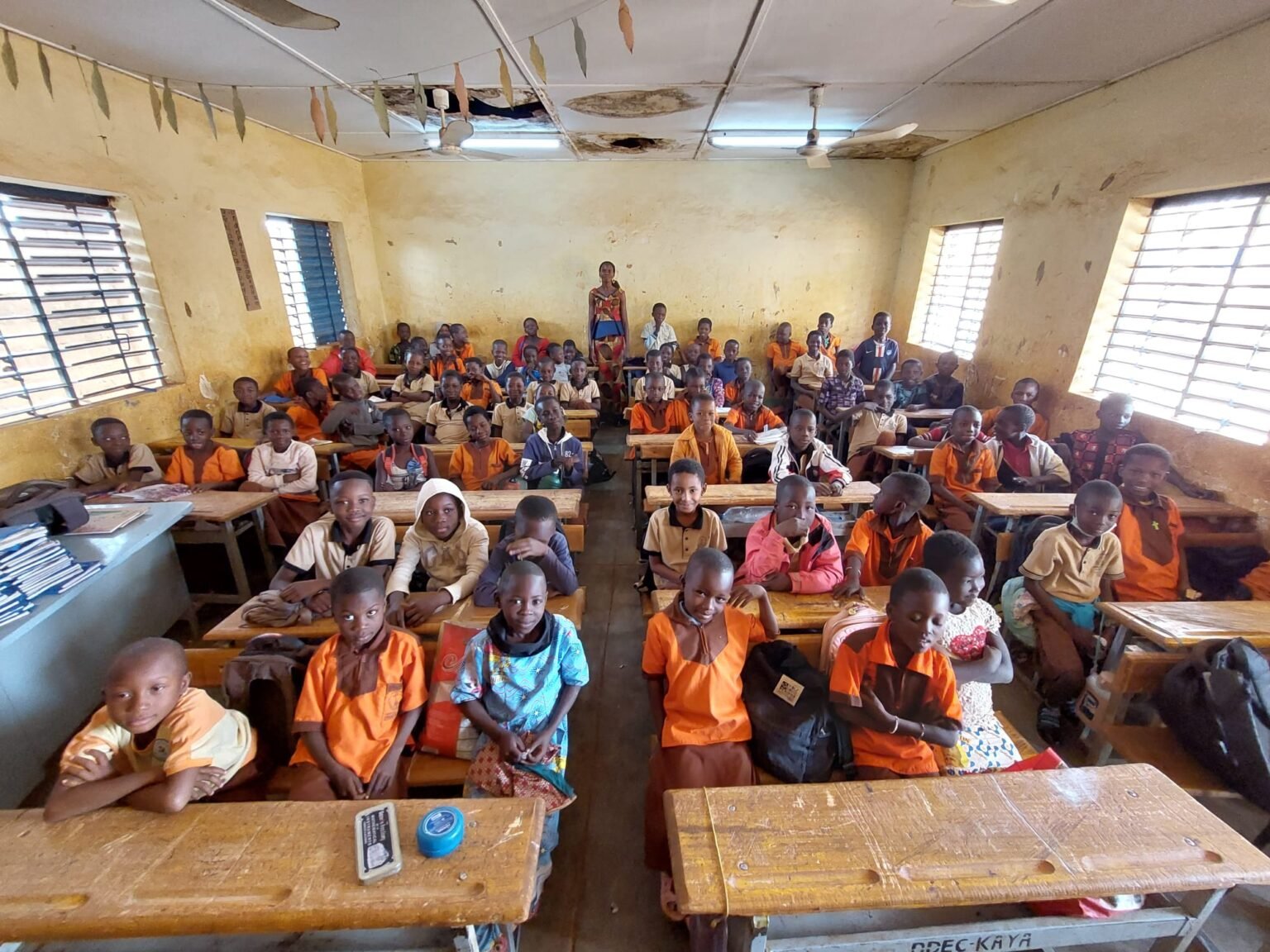
Primary classroom of a public school
That first year of operation of the school scholarship project made us discover a harsh reality that we hadn’t known until then: the scarcity of places in public schools (with an average cost of €8/year for primary and €15/year for secondary/baccalaureate) and the mothers’ incapacity to pay for a private school (€80 for primary and €170/year for secondary/baccalaureate).
Public school, assuming they get a place, is not expensive in absolute terms. But it must be taken into account that the vast majority of Rimkieta families do not reach the income level of the 2025 minimum interprofessional salary (SMI) which in Burkina Faso is €815 per year. Therefore, the cost of public school represents between 1% and 2% of the SMI. But with an average of 6 children per family, the total burden of education accounts for between 6% and 12% of the family income.
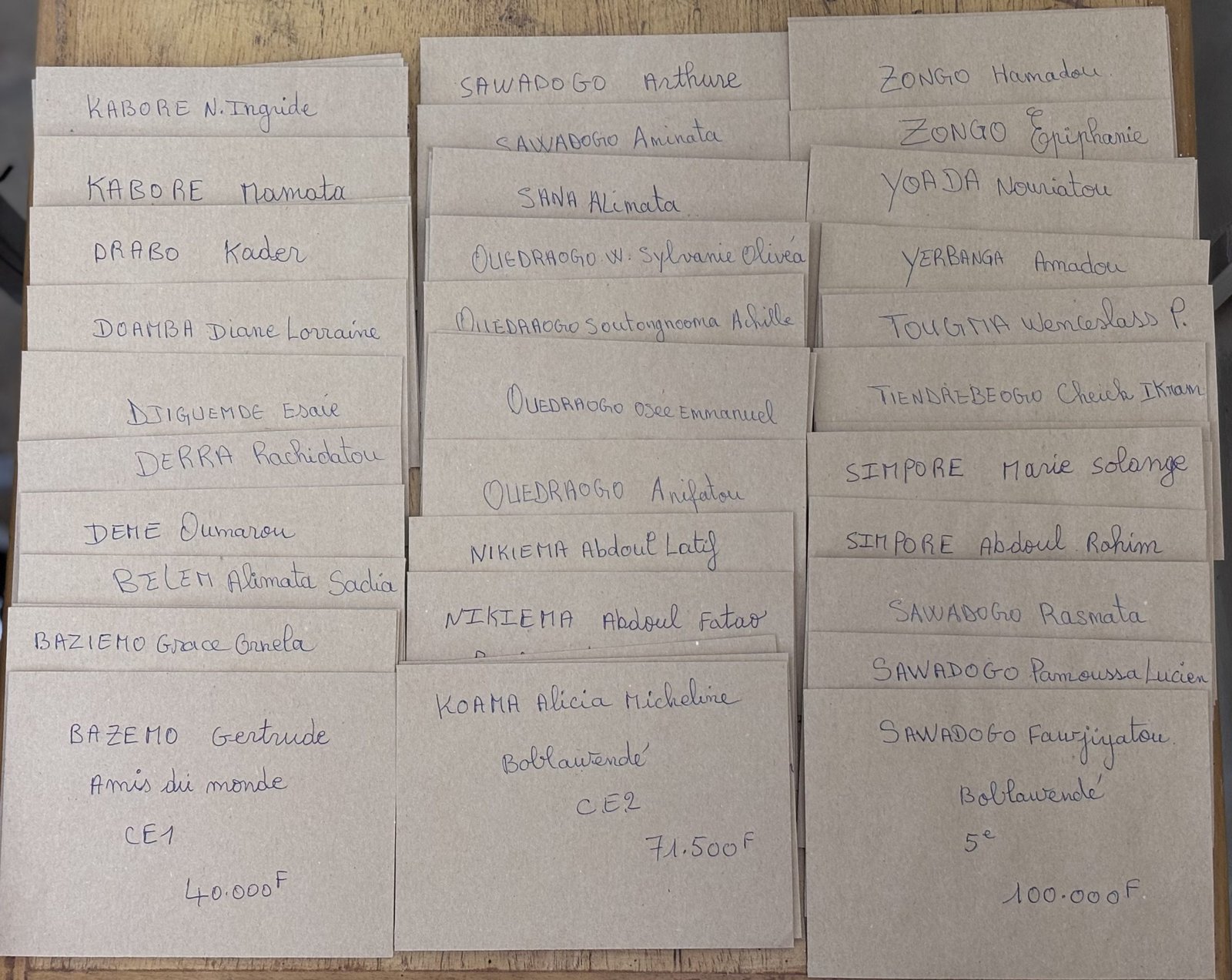
Envelopes prepared with the scholarship amount for each boy and girl
The main economic difficulty, however, is not in the absolute cost, but in the extreme precariousness of incomes, which barely suffice to cover the most basic needs. The daily food for all family members alone (which in most cases is reduced to a single meal a day) consumes more than 70% of the annual family income.
Added to this economic factor is an additional obstacle: the cultural one. In many family environments, formal education is still not perceived as a priority, with greater value placed on the help the child can provide to the family, in the fields, with domestic work or informal jobs, from an early age. However, let us remember that, in Spain, well into the 1950s, education was not a priority for many families either. It was necessary for the law to impose it, and, on some occasions, for municipal authorities to intervene actively, gathering up the children who were still playing in the street, taking them to their homes and explaining to their parents the new obligation to take them to school.
Burkina, and possibly other Sahel countries, are today in a similar situation to what many European countries experienced six or seven decades ago, meaning between two and three generations.
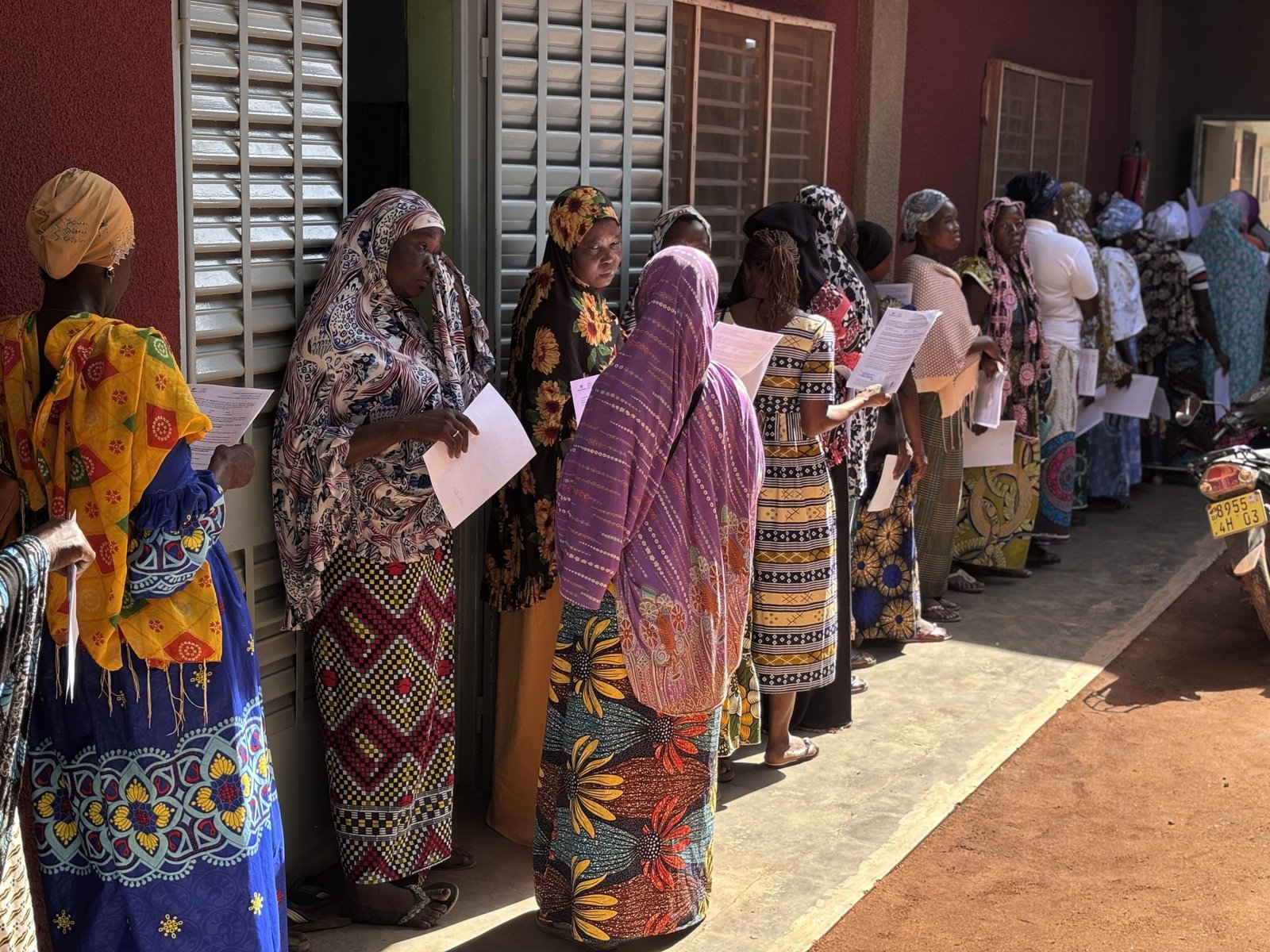
Queue of women waiting for the scholarship
The schooling of girls, for its part, deserves a separate chapter. In a deeply “patriarchal” culture (a social, political, and cultural structure in which the male holds privileges, power, and authority, and where women occupy a subordinate position), girls especially suffer the consequences of this inequality. They lack autonomy, control over their bodies and decisions, and have internalized gender roles that impose upon them the obligation to serve, please, and obey.
Furthermore, and in fifth place, the quality of teaching is affected by overcrowded classrooms (with over 100 students, even in private schools), scarce teaching resources, and obsolete methodology. All of this results in an alarming school dropout rate of more than 48% of the children who start primary school. The literacy rate for those over 15, according to 2023 estimates, does not reach 44%. This means that more than half of the adult population cannot read or write, which seriously limits their possibilities for personal development, access to job opportunities, and social participation.
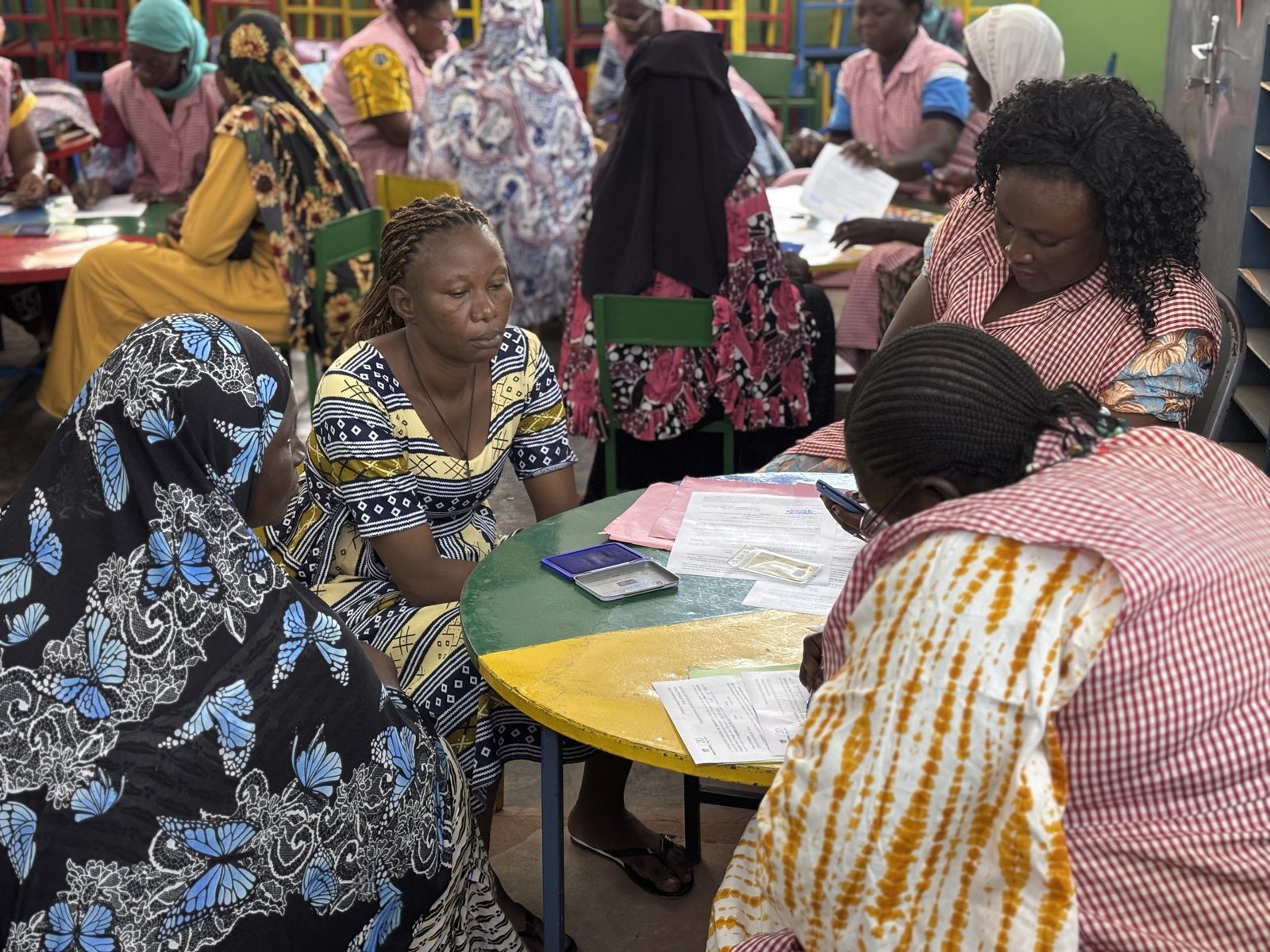
Essential collaboration from the kindergarten supervisors.
On the other hand, managing the delivery of nearly 450 school scholarships in just one week, including customized school supply kits for each child, according to the requirements of each school, is a logistical challenge. But the now more than 17 years of experience in these endeavors, through a well-structured process and the valuable collaboration of the maternelle monitors, who play a key role in the organization throughout the week, allows us to carry it out with maximum efficiency, harmony, and optimal results year after year.
This year there is one case, that of Salimata, that has particularly impacted me and has served as inspiration for this new account.
To put you in the picture, the scholarship delivery process begins with the daily calling of 100 mothers. Sylvie, the project manager, and I attend to them one by one, in order of arrival.
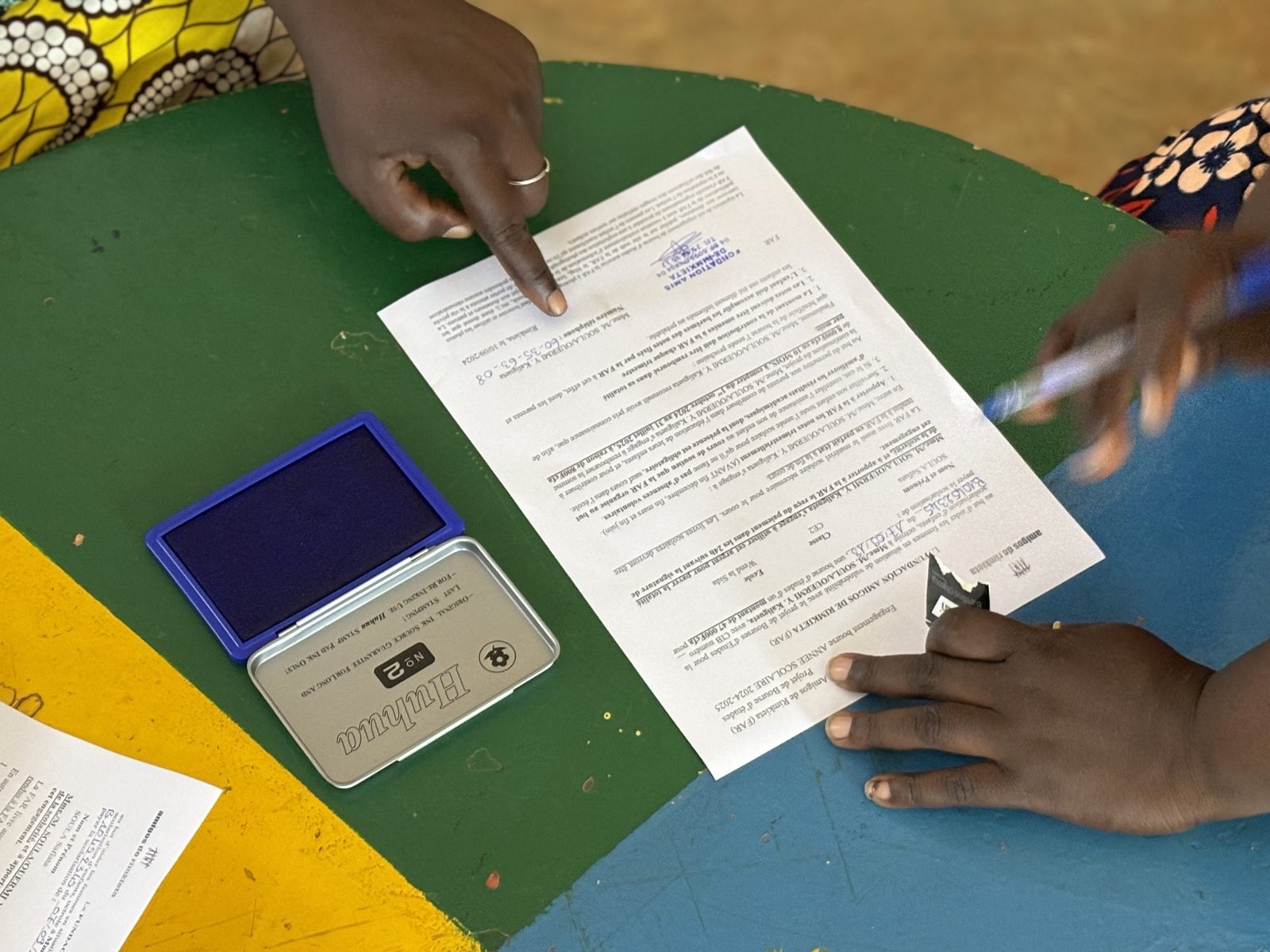
The fingerprint as a signature due to being unable to read or write
The fact that many of them, even knowing that the scholarship is secured, arrive to queue at the maternelle’s door every year at dawn and wait patiently for us to start giving out the scholarships at 8 am, demonstrates the real value this aid represents to them.
After about 4 hours, we usually have delivered the majority. There are usually about 15 mothers left who arrive late, always for justifiable reasons. But there are also, every day, four or five women who do not show up because they have forgotten…
Most of the time these are grandmothers in charge of orphaned or abandoned grandchildren, who cannot even read the notice for that day at that time. They are alone, the children are small, and they have no means of knowing what day they have to come, unless we call them personally.
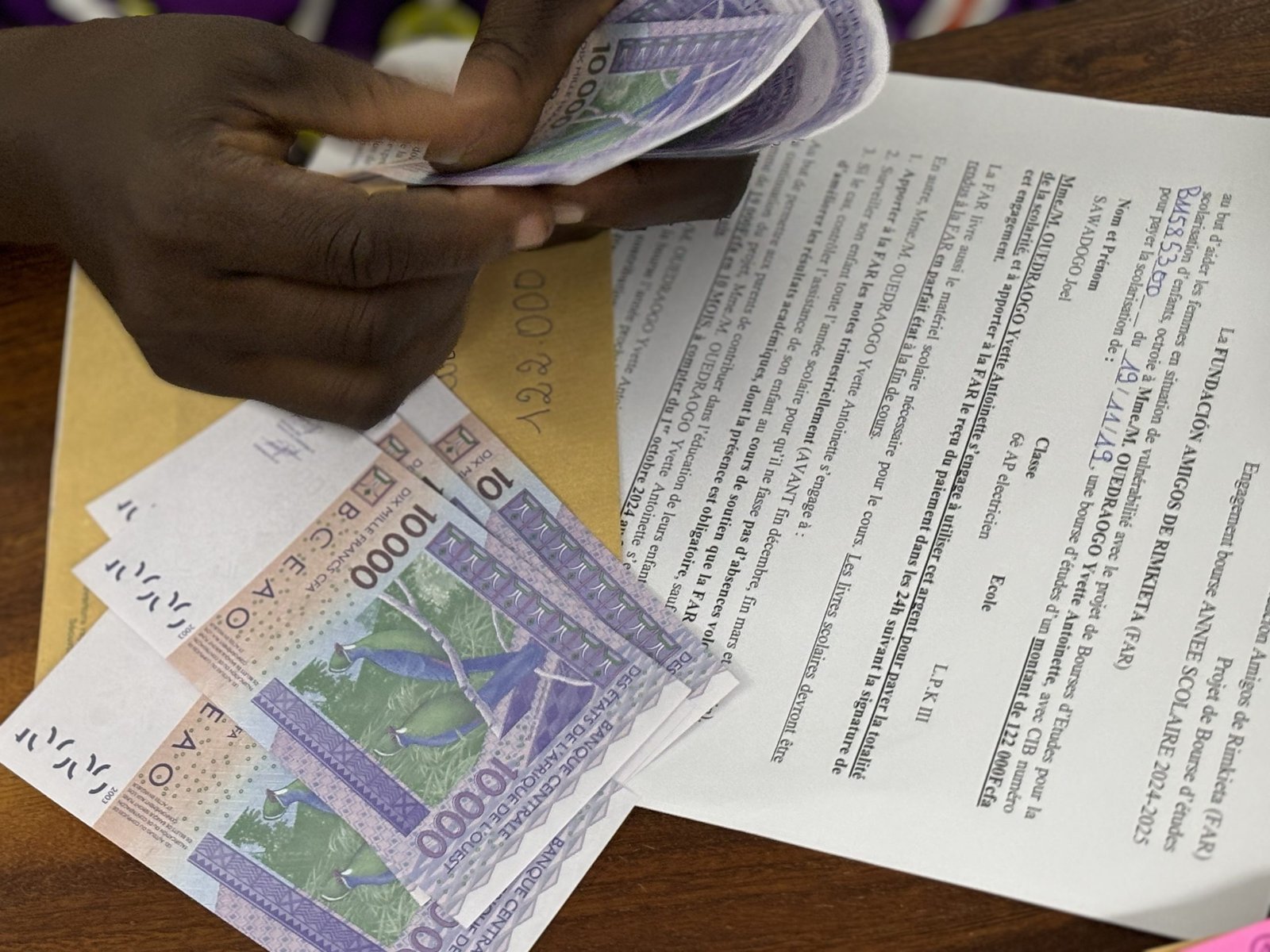
Verification of the money before handing it over
However, there is also an isolated case, more difficult to understand, where the mother or guardian has no apparent justification. They sit in front of Sylvie and me, looking down, unable to explain why they forgot to come and collect a school scholarship for their children… because not even they understand it. I confess that, faced with these cases, I have to make a real effort not to judge, and to try to understand circumstances that, many times, are harder than they themselves are able to convey.
And this year it has cost me even more, because of Salimata’s case that I mentioned earlier, who came to collect the scholarship directly from the clinic, where she had given birth to her third child barely 24 hours before.
Although we always try to take into account the personal circumstances of each mother, the conditions under which a woman gives birth here—without anesthesia, without specialized medical support, and with all the effort involved in bringing a life into the world in a precarious environment—Salimata has set the bar very high for all those who are late, and especially for those “who forget.”
Salimata’s case is a reality check that, in addition to reminding us, with a silent and resounding force, why we are here, recharges our energy to keep doing what we do. Her effort to meet the date and time for the delivery of her eldest son’s scholarship accentuates the real value this aid has for many women in Rimkieta and reaffirms the deep meaning of our work.
The Salimatas deserve everything…