Blog
< Back
Identity for All: 401 New ID Cards in Rimkieta
After more than 12 hours of intense activity at FAR, marked by strong mobilization and a constant flow of people in the courtyard and maternelle classrooms, 401 women, men, and young people went from being undocumented to obtaining their National Identity Card (DNI). What may seem obvious in many countries is not the case in Burkina Faso, where one in three inhabitants lacks formal identification.
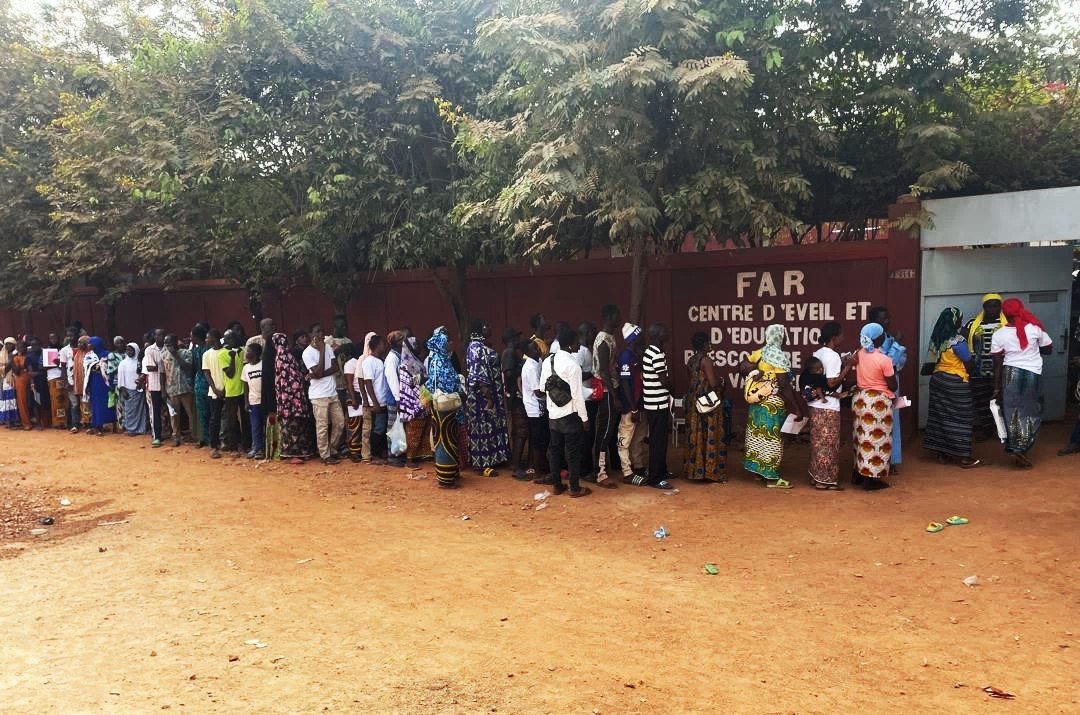
Line of campaign beneficiaries at the kindergarten entrance
This post does not feature the personal story of any woman or child benefiting from our projects, as is often the case in my post, and perhaps for that reason you may find it less emotional. But it speaks of one of those many activities we carry out that do not change a single, specific life and yet have an enormous social impact. The good news is that, to make up for it, it’s brief… so I hope you’ll keep reading!
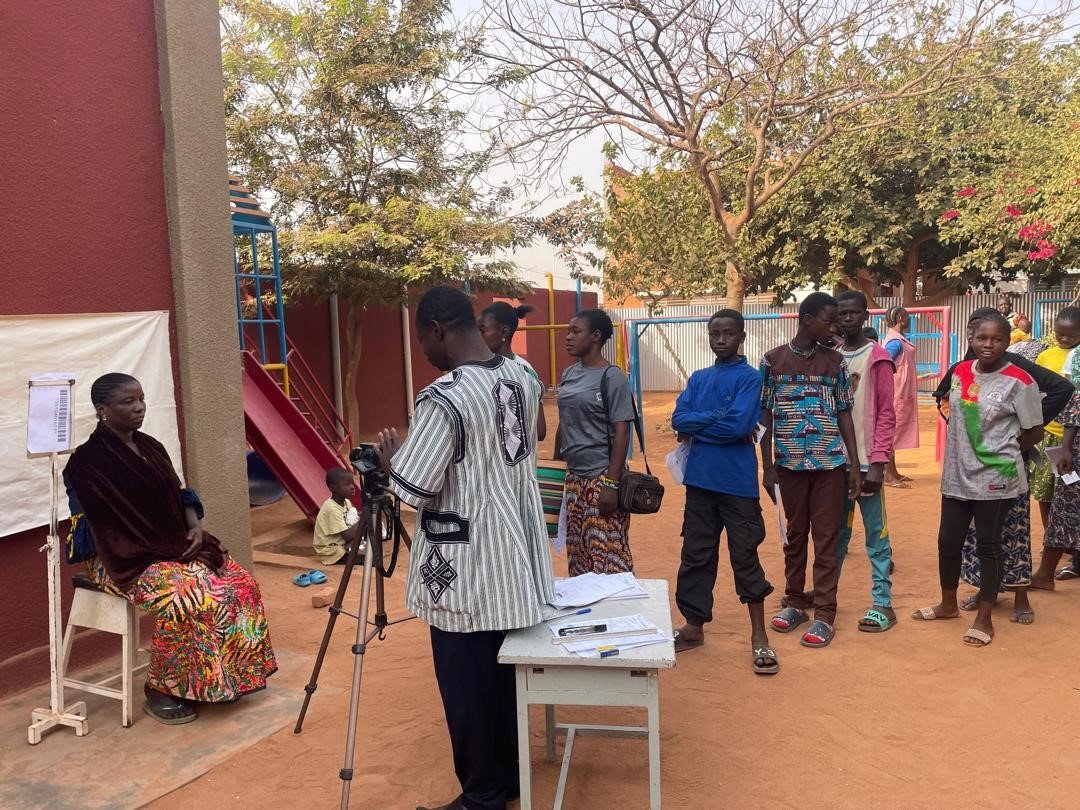
On-site photo shoot
This second ID card campaign, led by National Police Commissioner Mr. Bayala and coordinated by Jacques, FAR Deputy Director, together with Sub-Commissioner M. Belem, was a resounding success. This is reflected in the 401 beneficiaries, a figure far higher than the 215 registered in the previous 2019 campaign.
The campaign’s success was made possible by the combined efforts of a team of 20 National Police officers and 13 volunteer FAR staff, who played a key role in organizing and carrying out the campaign. The officers, with extensive field experience, demonstrated a high level of professionalism, while FAR personnel actively managed logistics and guided beneficiaries, providing effective support to the police team.
The day’s activities, conducted in an atmosphere of organization, rigor, and safety, included:
- Legalizing 250 birth certificates for individuals whose documents were not in order, an essential step to obtain the ID card;
- Reporting the loss of 20 ID cards for those without one, a prerequisite for obtaining a new card;
- Issuing 401 ID cards, including registration, collection of personal data, fingerprinting, and on-site photography.
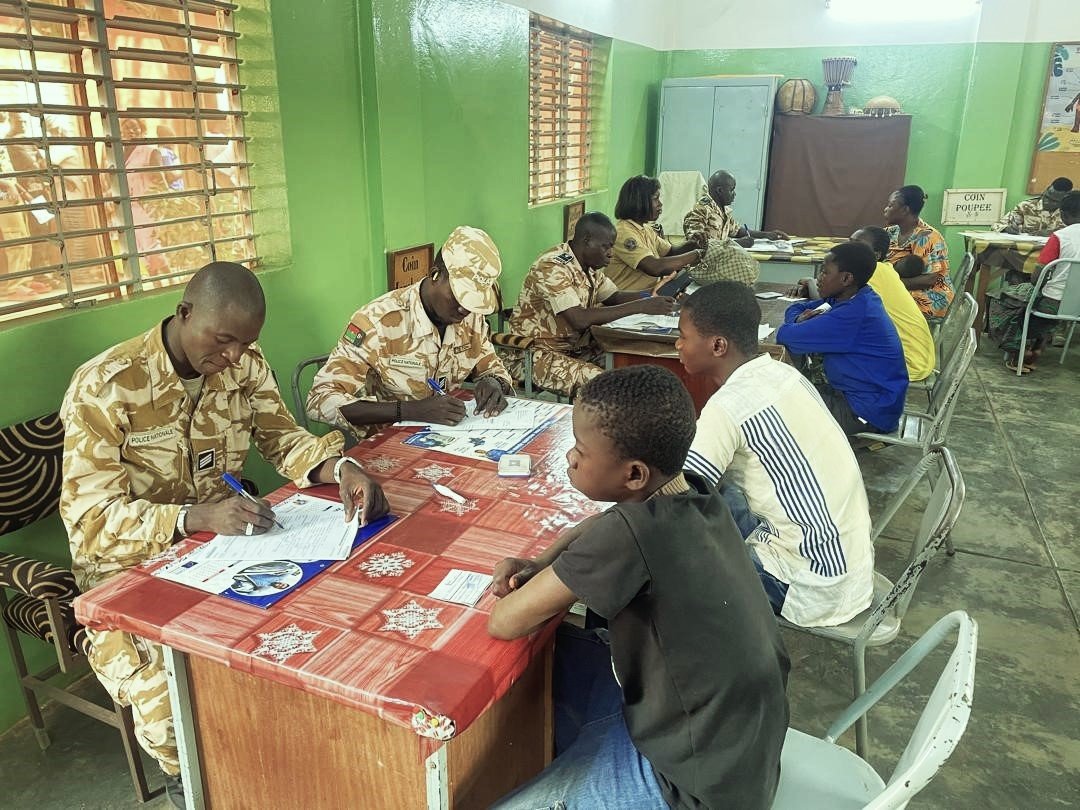
Collection of personal data
The main innovation of this campaign compared to 2019 was the introduction of the new biometric ID card, a significant advance in Burkina Faso’s identification system. Thanks to government efforts, the card includes digitally registered fingerprints, allowing for safer and more reliable unique identification.
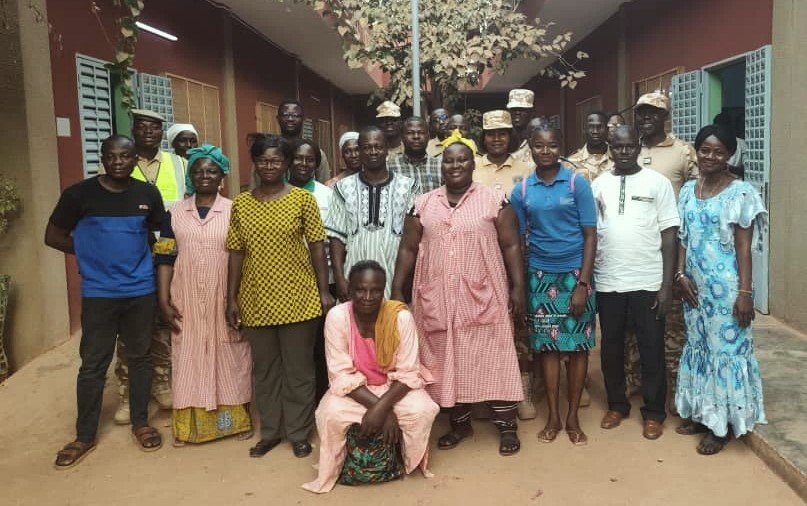
Team of FAR agents and staff
Until recently, having an ID card was largely irrelevant, as it was rarely required for most everyday procedures. However, new regulations aimed at facilitating administrative processes and strengthening security have made possession of this document mandatory and essential.
Moreover, in a socioeconomically highly vulnerable context like Rimkieta, the FAR’s subsidy covering 80% of the cost of the DNI (€4 of the €5 total cost) has been decisive in encouraging many people to obtain it. Equally crucial was the opportunity to complete the process close to their homes, avoiding long and costly journeys. Keep in mind that in Burkina Faso those €5 amounts to roughly 8% of the Guaranteed Interprofessional Minimum Wage, in other words, a small fortune.