Blog
< Back
FAR Scholarship Student Imprisoned
Hadaré is not the first FAR beneficiary to wind up in prison, and I’m afraid he won’t be the last, either. Such is the reality here, despite the FAR’s direct efforts to protect vulnerable young people from the rings of crime, drugs, and prostitution typical in impoverished areas. This goal is an important component of many FAR projects, such as Educational, Professional and Sports Reintegration, School Scholarships, and Sports Training (girls, as you know, treated like “Cinderellas” are another story).
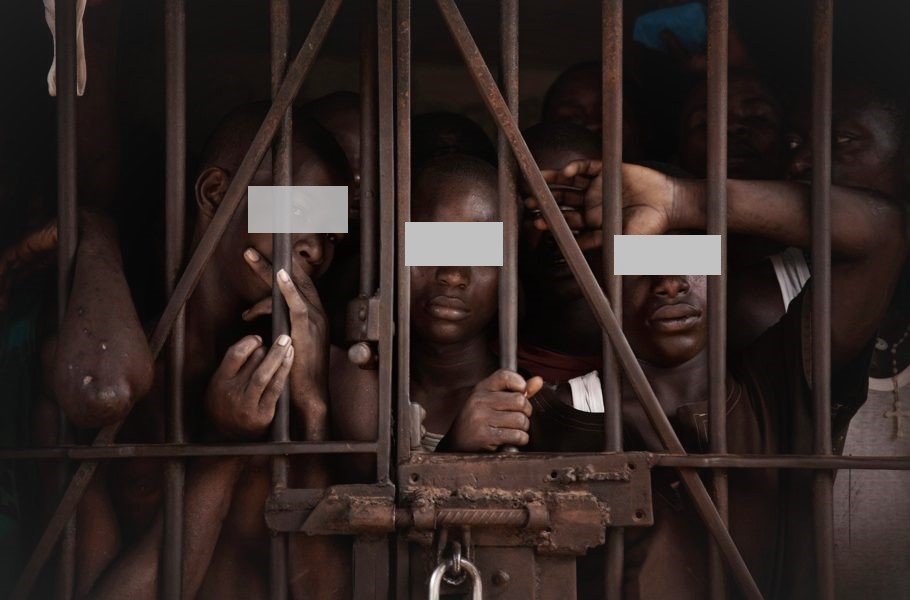
Young people in prison. Photo: DR
Hadaré attended the Maternelle until he completed P5.Because his parents were unable to pay for his continued schooling, he continued to benefit from FAR’s assistance through the school scholarship project.
Now 15 years old, in his 3rd year of ESO (the Spanish acronym for obligatory secondary education), Hadaré is the third of seven children in his family (one from his father’s first wife, five from his own mother and one nephew who was orphaned by a brother of the father with whom he lives). All very simple…
His 36-year-old mother digs sand, which she sells to adobe brick makers. Because this grueling job does not provide enough income to survive, she also works as a street vendor selling tamarind (a fruit used for a local drink). His father is 59 years old and sells peanuts in the market.
Over the eight years he was in school with a FAR scholarship, he maintained a grade point average of 8.3 in primary school and 6.0 in secondary school. Everything went according to plan in terms of his behavior and his parents’ fulfillment of their commitments to the scholarship (contributing 10% of the fees, submitting grades quarterly, returning books at the end of the year in good condition, etc.).
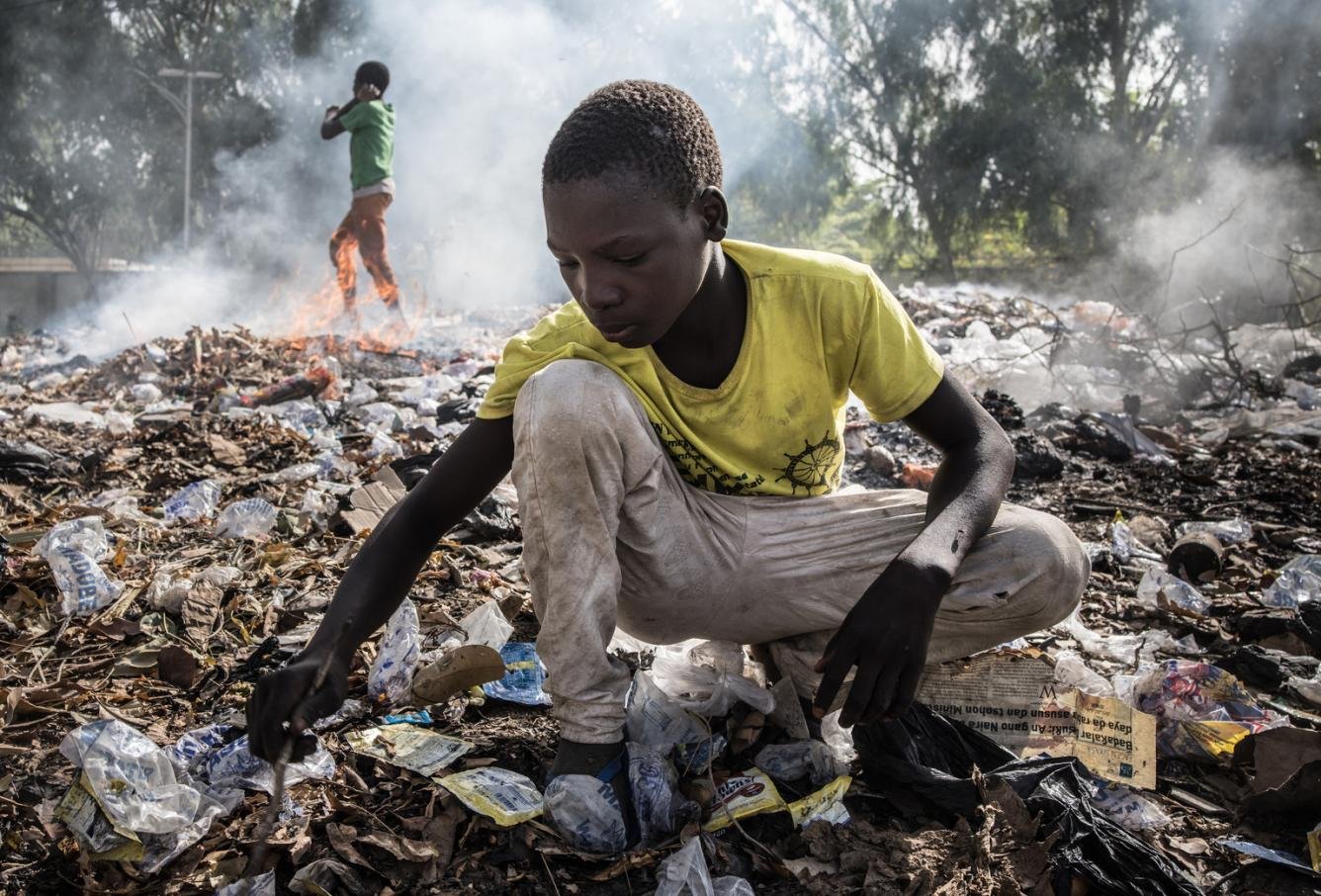
Subsistence of street children looking for something to sell among the garbage. © UNICEF/UN016295/Gilbertson
Nevertheless, the dangers of the street are the dangers of the street, and the needs these children face at all levels (affection, attention, etc.) are enormous. Hadaré has been a victim of all this.
What little we know about what happened is confusing. The facts are that Hadaré – a minor, enrolled in school, and with no previous record – admitted to the police that he helped a “friend” to sell a rickety motorcycle to a scrap dealer whom he was duped into believing to be that “friend’s” father, and has been imprisoned by order of the prosecutor, awaiting trial.
For cases like this, we count on the invaluable collaboration of Adama, a university graduate and former FAR scholar, who, on his own initiative, benevolently offers legal advice to all the families who are beneficiaries of FAR projects (more than 6,000 directly and about 20,000 indirectly). The Burkinabé system only provides a court-appointed lawyer in cases involving murder accusations. A private lawyer costs at least 500 euros. This price is utterly inaccessible to the vast majority of the Burkinabé population, who must face all manner of legal dealings (ranging from requesting unissued birth certificates to major incidents such as Hadaré’s) with absolute ignorance of the processes.
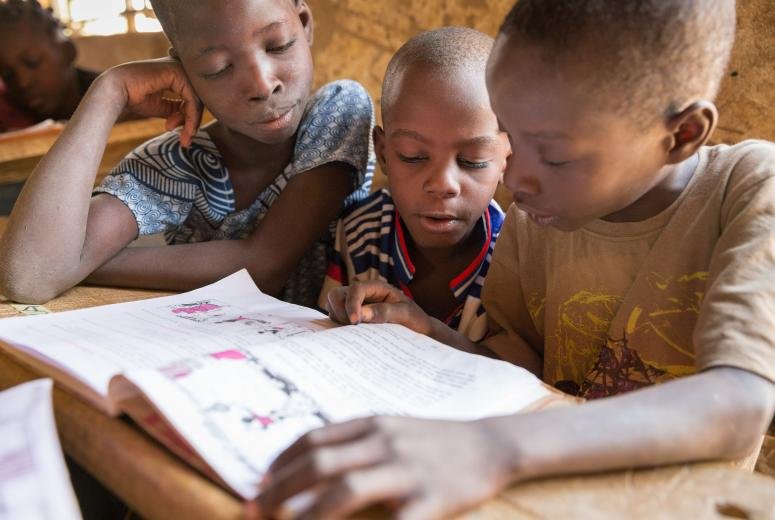
Education, a key development factor and main focus of RAF activities. School enrollment rate in Burkina Faso in 2021: 6.2% in preschool; 86.1% in primary; and 49.3% in secondary. Photo: GPE
Ver detallesSubsistence of street children looking for something to sell among the garbage. © UNICEF/UN016295/Gilbertson
Thus, Adama’s initiative has enormous value. It serves a means of recognizing the aid he received from the FAR by giving his own aid back to society in a disinterested way. And it further serves to accompany the many families who would otherwise remain completely helpless before important practical matters.
Adama believes that because Hadaré is a minor with no criminal record, the judge will either release him or impose a sentence of about three months. Yet, this will not be confirmed until the trial, scheduled for June 8. Hadaré cannot be spared this time in prison, in a Burkinabé prison (see post).
Three months in jail is an overwhelming personal experience for anyone. When the prisoner is a young person, and the prison is not precisely a “model” institution, the consequences of bad relationships and possible abuses can leave an indelible mark.
Let us pray for Hadaré and his judge for the best possible outcome. And let’s continue to work, through education, to avoid this type of situation of serious risk for the most disadvantaged.