
Blog
From Creative Drought to Sowing Hope: The Netri-OVF Garden
Over the last few months I have been stuck in a creative impasse. As you well know, inspirational stories of every sort abound here almost daily. Nevertheless, when I’ve sat down at the computer, I’ve almost unconsciously ended up pressing a single key: “delete.”
The certainty that everything has an explanation that is always for the best makes more bearable my dry spell, which I attribute to a difficult 2024. Beyond the enormous void left by my dear Sergi, my “adopted brother” and FAR patron, whom I still miss eight months after his departure from this world, many small issues have accumulated, becoming heavier over time.
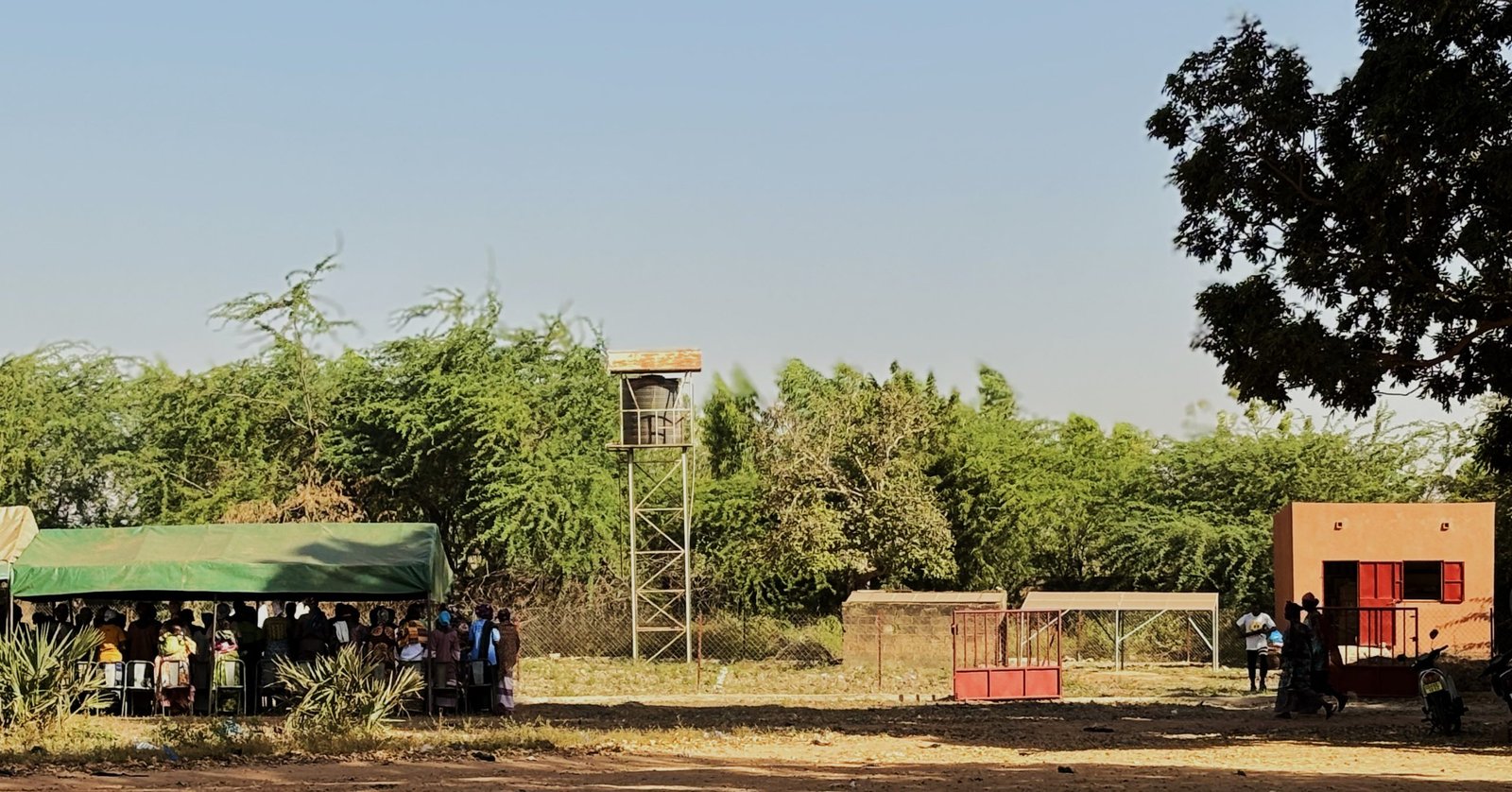
Moment of the inauguration of the Netri-OVF Garden. The land is 3,000m2 deep, with the storage for tools, the well and the solar panels and the water tank.
But last week we inaugurated the “Netri-OVF Garden,” a project made possible thanks to the help of the Netri Foundation and the Open Value Foundation. Sharing the morning with the 50 widows in precarious circumstances who will be the beneficiaries of the project reconciled me with the keyboard with the confidence of sharing an important post.
The garden is much more than an agricultural space. It is a ray of hope and progress for these women, a place where they can gather, share, learn, and grow together. This project is not merely a source of income that will improve their families’ basic livelihoods. By hoeing and plowing the land, fertilizing and watering, delicately cutting the stems, and carefully removing the slimy leaves, they also strengthen their skills, self-confidence, and vision and role as people who generate and drive positive changes in the situations in which they live.
Empowering widows in a culture like Burkina Faso’s can involve teaching them to read and do basic arithmetic, creating friendship circles where they share joys and sorrows, and develop a sense of belonging to a group of like-minded people that mitigates the inherent loneliness of their condition.
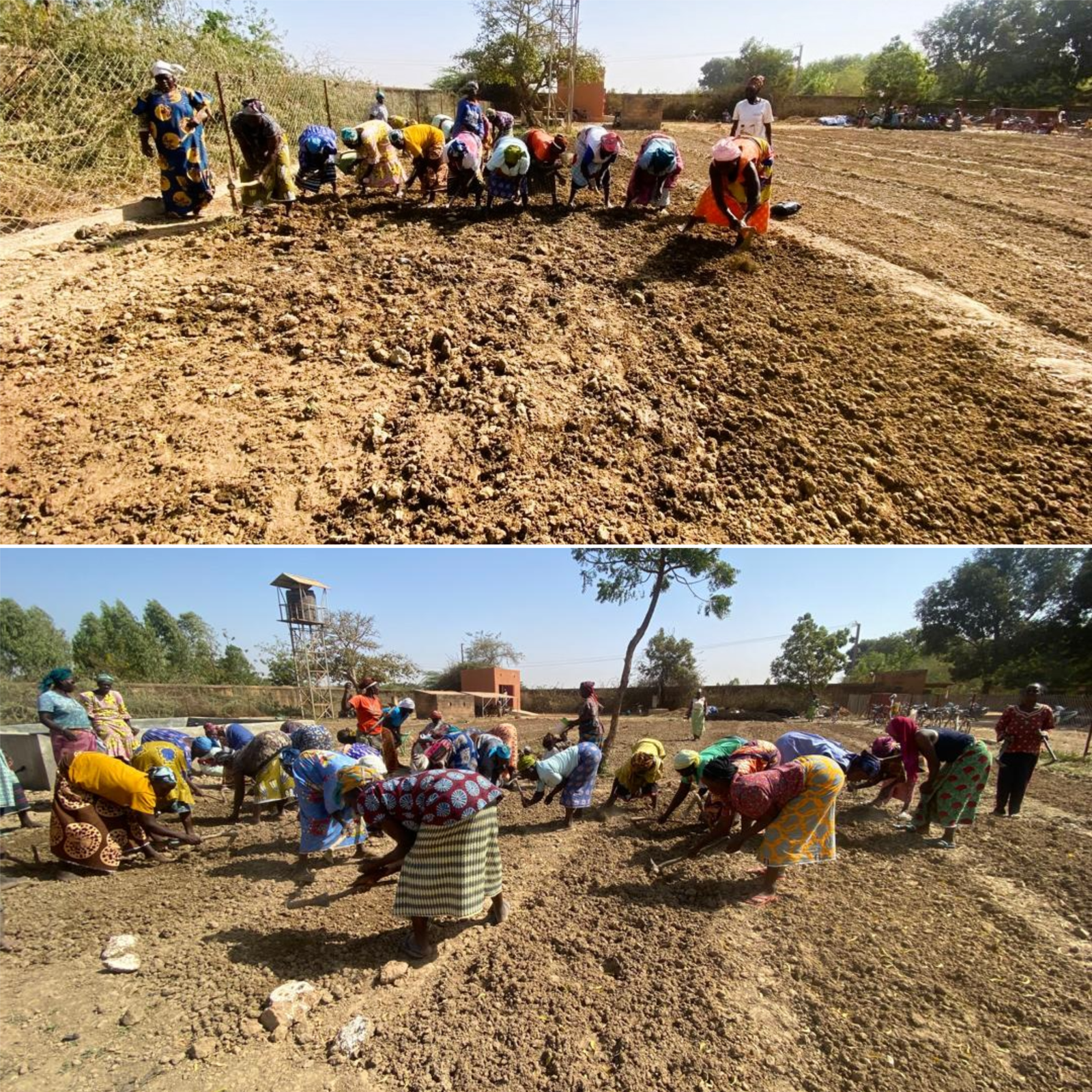
The women of the Netri-OVF Garden preparing the land for cultivation
At FAR, we remain faithful to our second principle of action: “to keep up more than to take up,” a firm foundation of our long-term strategy. FAR does not want to grow beyond what can be managed at distance both physical and cultural. Instead, FAR wants to remain where it was born and continue until it is no longer necessary to a population that continues to rank 185 of the 192 countries included in the United Nations Human Development Index. This approach requires that each new project, such as an agricultural operation, be conceived and carried out ensuring its sustainability, guaranteeing that it will endure and be viable over time.
The Netri-OVF Garden is the result of more than ten years of experience and learning in the operation of the first garden, the Netri Garden – which has been managed autonomously and profitably by 26 women, providing them a source of income that allows them to be economically independent. These women have not only gained income, but also a social recognition they had never known, strengthening their place in the home, transforming their social status, and allowing them to make decisions for themselves when necessary.
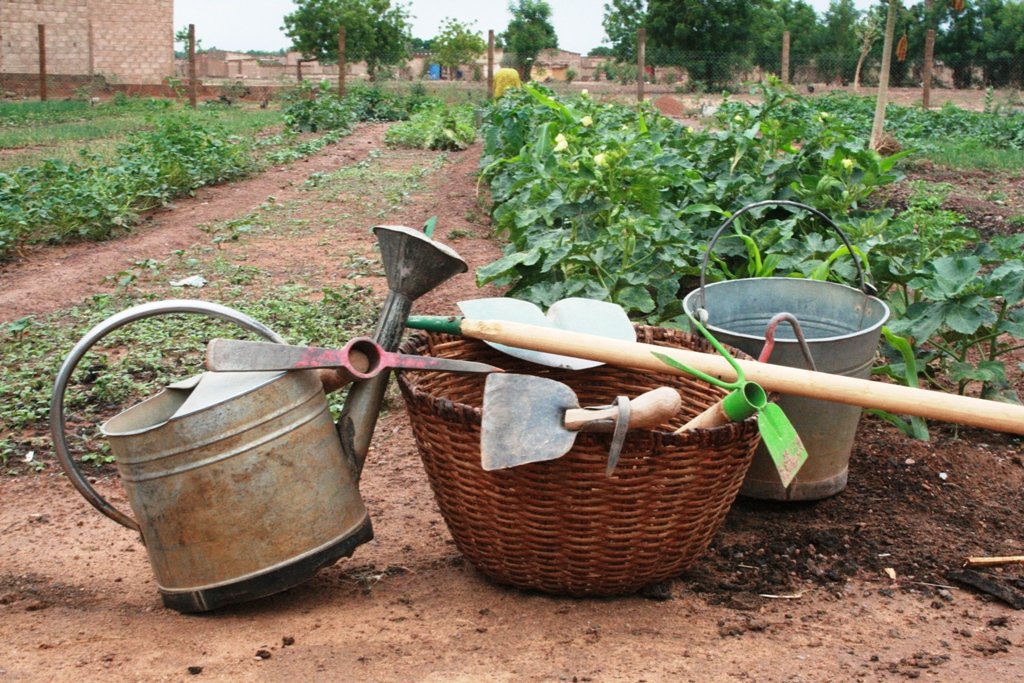
Giving the “rod” to fish, and fishing together
The Netri Garden is a clear example of “teaching how to fish,” but with the commitment to fish together for many years (to persevere!). The wonderful endeavor of closely accompanying these 26 women has resulted in today’s self-sustaining garden.
The women, in addition to paying for seeds and fertilizers, have managed to understand the importance of developing a contingency fund to maintain the garden, the tools, and the well’s solar installation, and of updating their training with an agronomist every two years.
It has been truly satisfying to see how, over these 10 years, the women have gone from generating initial sales of some €2,500 to more than €14,500, thanks to our insistence on the importance of investing in fertilization and irrigation, selecting the most profitable crop (lettuce has become the star!), preventing and controlling pests, optimizing the cultivation space, seeking new customers, and marketing actively. All this, monitoring the competition and helping them adapt to different market changes.
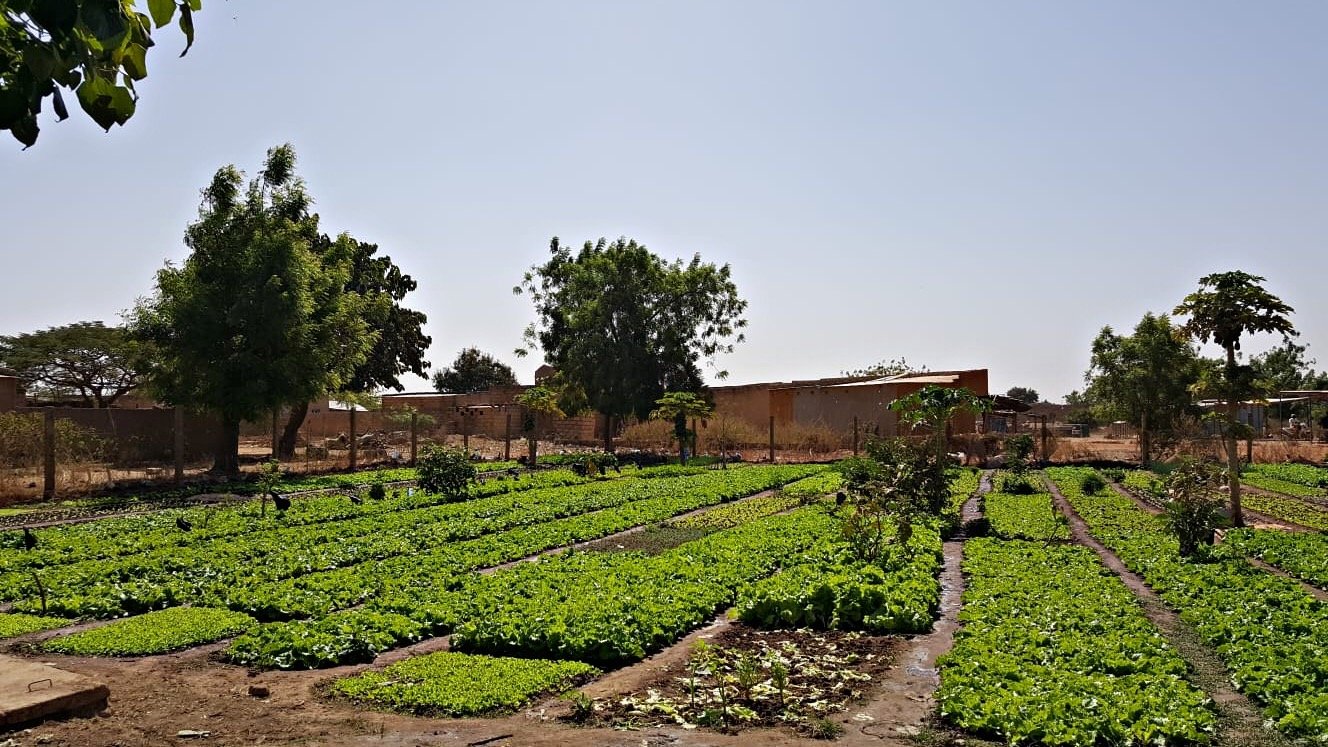
Huerto Netri: lettuce, the most profitable crop
Equally gratifying has been generating a certain habit of saving, in women who face a daily struggle to survive that makes it enormously difficult for them to manage their finances, to be able to take care of their children’s schooling, or to attend to their healthcare. Yet, today, the garden provides them not only economic sustenance but also the security of a more stable future.
Perhaps what has most inspired me is the enthusiasm with which the Netri Garden women have voluntarily committed to supporting and accompanying the incoming beneficiaries of the new Netri-OVF Garden. With enormous generosity, they are sharing everything they have learned, with the challenge of training the newcomers to replicate the success they have achieved themselves. In time, then, there will be 76 rather than 26 autonomous women of Rimkieta, citizens with fuller rights who are an example to their families and neighbors.
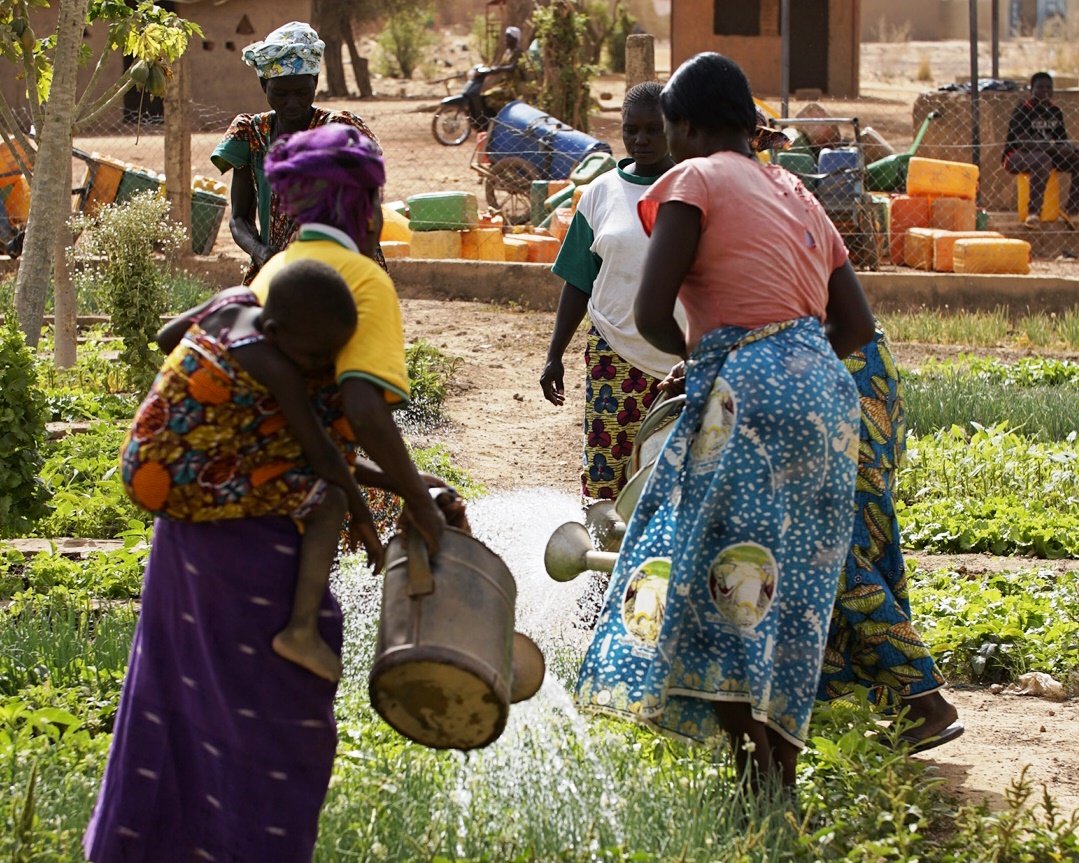
Women of the Netri Garden
As the only real difficulty we have faced in replicating the Netri Garden has been finding land (it took more than two years!), I’m convinced that this first replication is just the beginning. Thus, I dare to put in writing that it won’t be long before what we have learned leads to achieving the Netri-OVF Garden’s goals and we can the search for new land for the creation of a third garden… which will lead to a fourth… a fifth… a sixth…
I would like to conclude extending special thanks to the Netri and Open Value Foundations for their support and patience. Thanks, too, to all those who have contributed to the physical realization of the garden project: M. Konseibo and Maitres Fulgence and Bellemou, who once again accompanied us with their professionalism and “savoir faire;” Father André and the entire Congregation of the Sons of Mary Immaculate, to whom we owe the cession of the land; and of course, to “little María,” who led the entire process of establishing the garden from the beginning.
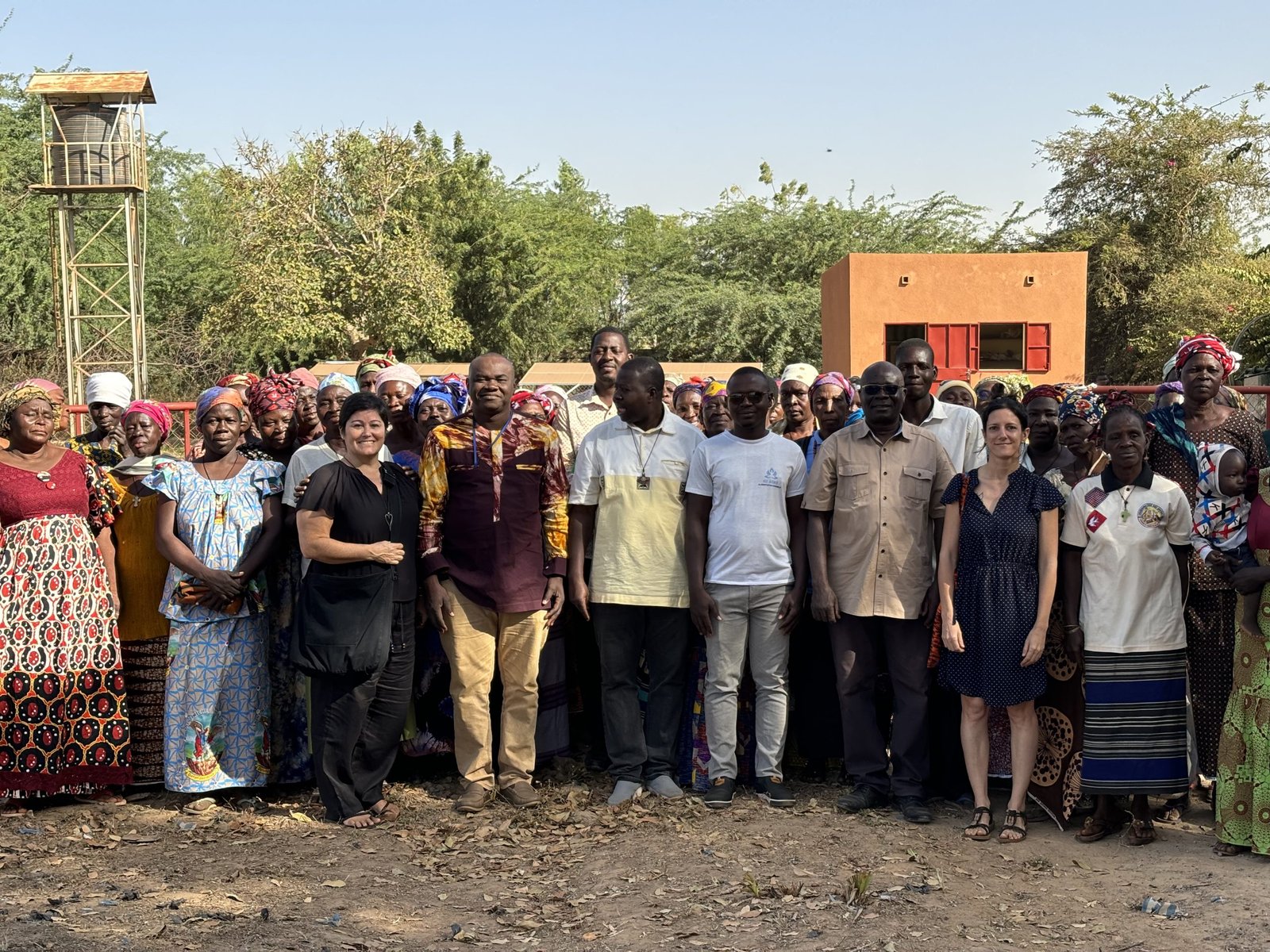
Family photo of the opening day of the Netri-OVF Garden
May this “jardin,” as the French call it, be a place of shared joy and prosperity for all the women who benefit from it!
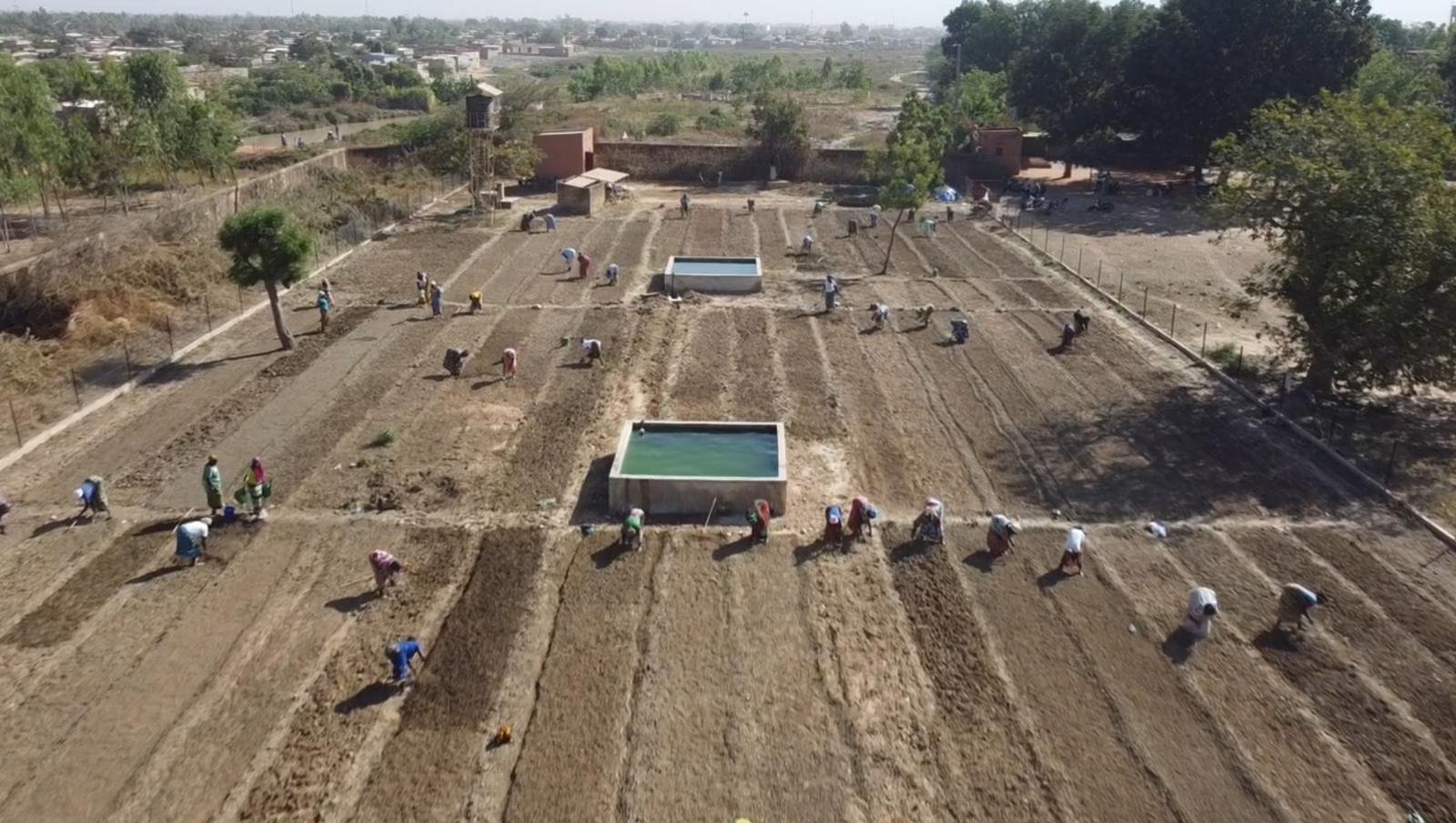
Aerial view of the Netri OVF Orchard. Very special thanks to David Armada of Emsimision for the photo.