Blog
< Back
Poko, Burkinabé Woman: Archetype of Sustained Effort
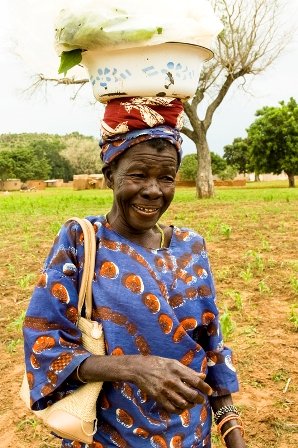
Photo: Marta Conti
The maelstrom of everyday life, that frenetic rhythm, which, thanks to a cup of coffee, goes from 0 to 1,000 the second the alarm clock rings each morning, makes it difficult for me to be aware of the reality that surrounds me. I can’t pretend I don’t often think it’s better that way. Yet it is a double-edged sword. It can distort my perception of what actually happens in this environment – a perception crucial to a healthy balance between the rational and the emotional. Stopping to observe and to put in writing a day in the life of the Burkinabé woman reconnects me with the essence of this wonderful land and its women (continue reading).
I have been able to take this time thanks to Santiago Tarín, a FAR sponsor and vice president of ABE (Spanish acronym for the Association for the Search for Excellence) who asked this humble servant to collaborate on the book, “Sin valores no hay gestión excelente” (Without Values There Can Be No Excellent Management”.
The volume includes the reflections of 27 authors concerning their “experiences of success and excellent management, through values such as commitment, humility, respect, effort, sustainability and ethics.” The contributors include: IESE professor Pedro Nueno; Isaías Táboas, president of Renfe; Raquel Alastruey, magistrate of the Provincial Court of Barcelona; Josep Piqué, Spain’s former minister of foreign affairs (who passed away last month – may he rest in peace); Manel del Castillo, manager of the SJD Barcelona Children’s Hospital; and Javier Pérez Farguell, president of Clearwater International.
Staggered by their having though to include me, I accepted the challenge and focused my reflection on one of the many invaluable examples of lives of effort and perseverance that surround me, which I am able to appreciate when I manage to stop to contemplate them.
The pursuit of sustained effort (perseverance) can materialize into virtues or good habits, although it is among the values/intellectual models often rejected by so-called Western cultures,
Values are models of desirable qualities for human lives. They are definable concepts that, when practiced, make a person worthy of appreciation for embodying such a noble characteristic. When a value is habitually practiced as a way of life, it becomes a virtue.
I hope you enjoy the article!
The Burkinabé Woman: Archetype of Effort
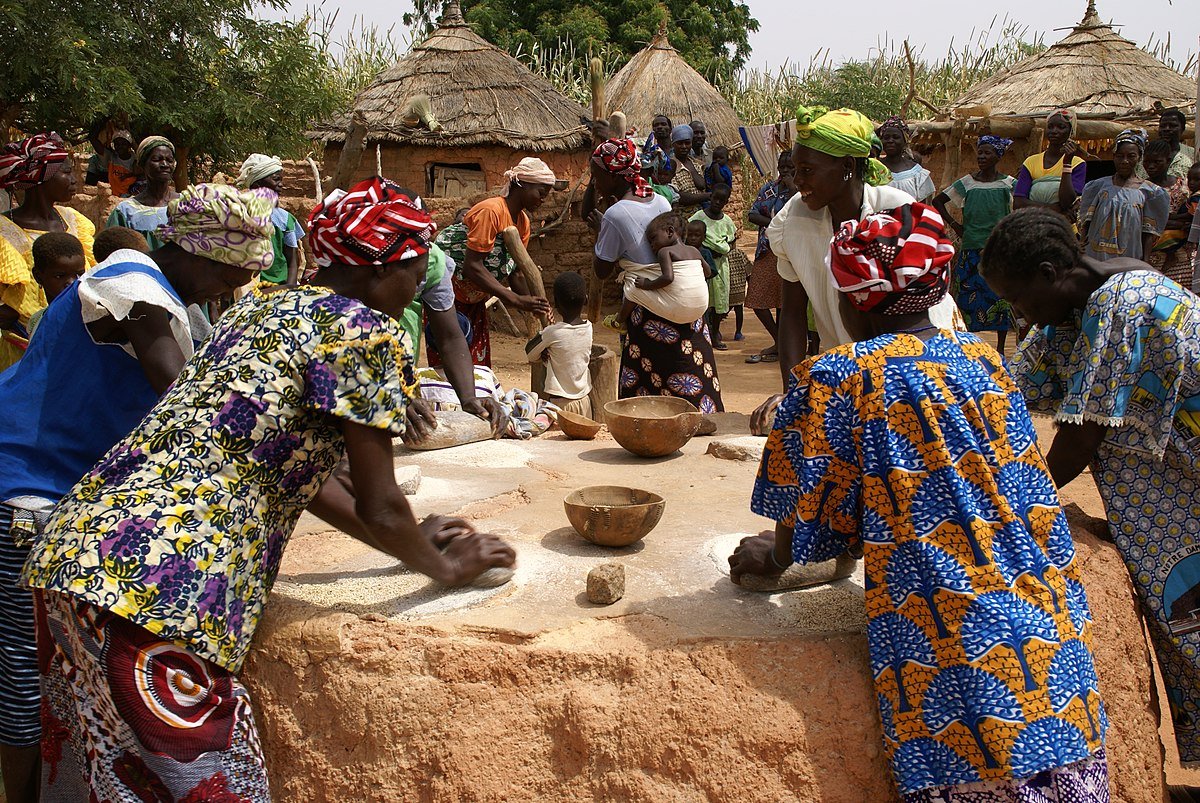
Current everyday image of women manually grinding corn, millet or sorghum to prepare tô, the national dish of Burkina Faso. Photo: Wikipedia
Due to my personal circumstances, I live surrounded by people who surpass themselves in the practice of effort, the value on which I will focus this article.
I am María Vázquez-Dodero, manager of the Friends of Rimkieta Foundation (FAR), and I have lived in Burkina Faso for more than 12 years.
The FAR is a social enterprise with the legal garb of a foundation. It has persevered for 17 years in its mission to develop the best possible living conditions for women and children in Rimkieta, one of the poorest neighborhoods of Ouagadougou, capital of Burkina Faso, a country ranked by the United Nations Development Program’s 2020 Human Development Index at 182 out of 189 countries considered.
FAR’s is an eminently social mission that we carry out with pure business principles like rigor, austerity and anticipation. FAR is a company like any other. Yet it is a non-profit one run with a surplus, in order to generate a patrimony that allows us to face difficult periods like today’s with the conviction that persevering more important than growing. Inducing a cultural change, rather than simply facilitating a material improvement, takes time. Thus, with these references, we focus our efforts on the best possible functioning of each of the projects we have underway here in Rimkieta, where there must be more than 100,000 people living today in a space of some 40 km2.
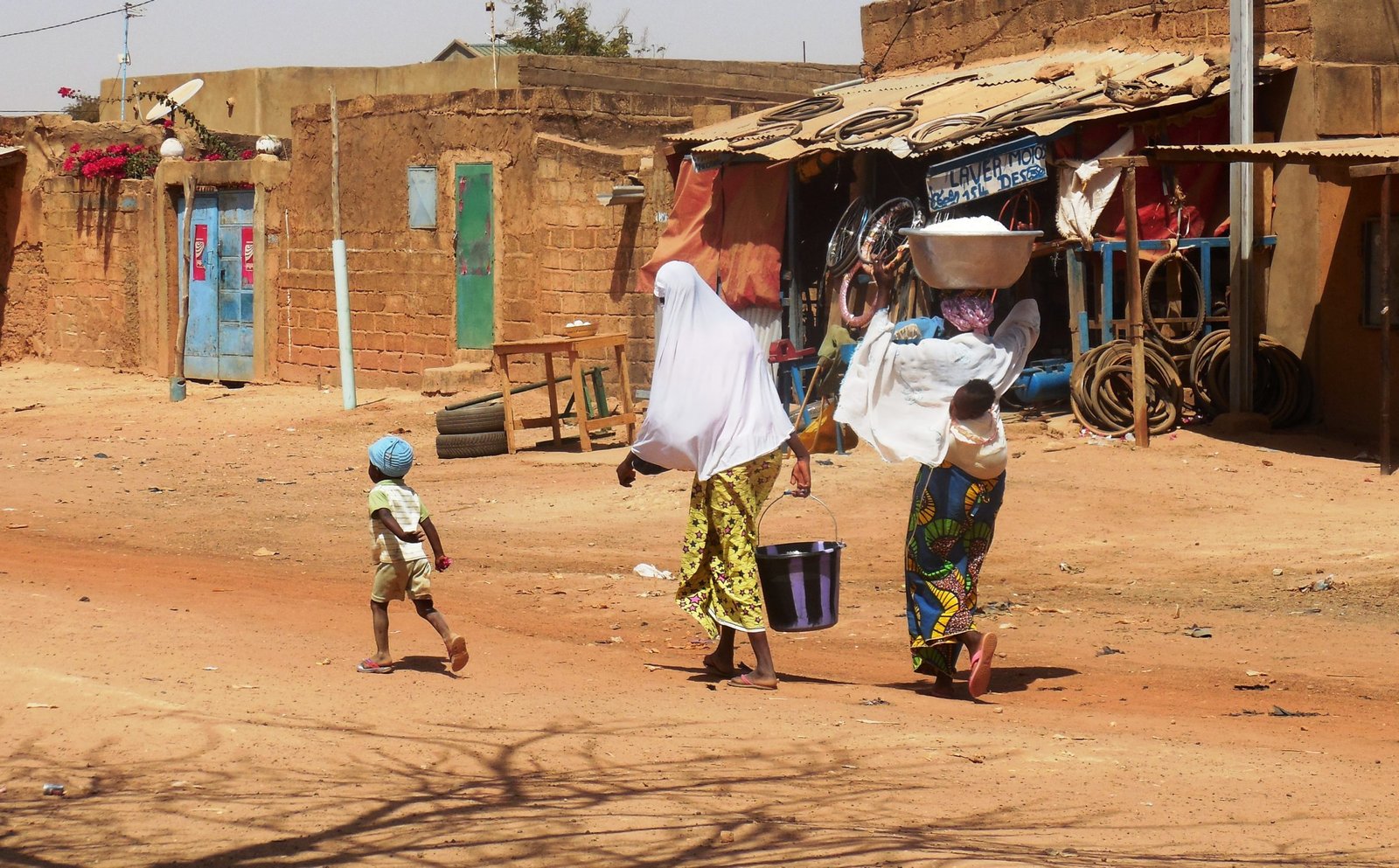
With a staff of more than 50 employees in Rimkieta (all but two of whom are Burkinabé) we have 12 projects underway. We serve 450 children in a kindergarten. We provide scholarships to educate more than 500 children and 12 university students. We have in training and reintegration in schools and workshops 147 “street children” and 173 girls (most of whom are orphans, who live like “Cinderellas” in “foster” families). We teach literacy and elementary skills to 60 mothers, as well as to 100 boys (these through sports training). We have granted more than 1,200 microcredits to women aiming to become entrepreneur. We maintain five wells. We have planted more than 10,600 trees in the neighborhood (planting each year another 1,000 while also watering and caring for the previous 2,000). We have also launched an orchard that maintains 26 jobs for women, and we have delivered almost 5,000 bicycles, which facilitate the mobility of more than 15,000 people.
Burkina Faso’s location in the Sahel implies many limitations that are difficult to understand from a Western European perspective. Landlocked, Burkina Faso is located in one of the areas of the planet most affected by poverty, forming part of the strip known as the “hunger belt”. Temperatures of 45°C, recurrent droughts and, since 2015, jihadist attacks by groups already operating in Mali and Niger, only aggravate the living conditions of its people.
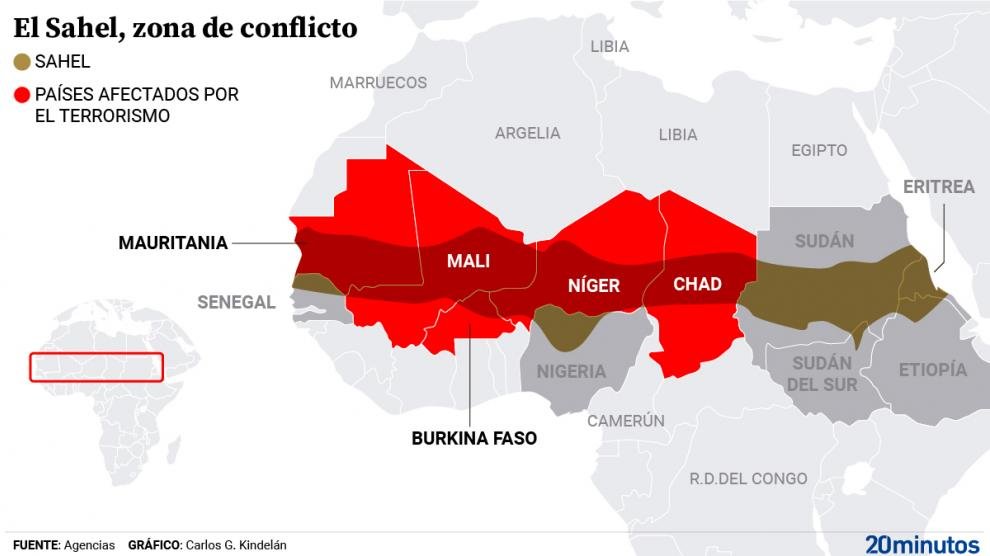
Map of the Sahel with the countries affected by terrorism
Furthermore, the combination of ancestral traditions and corrupt habits, and particularly, the 40 years of French colonization of what was then the Upper Volta, did not facilitate the socioeconomic, cultural and political development that such a long period of coexistence could have provided.
The Burkinabé people have some truly unique virtues, such as affability, calmness, religiosity, tolerance and endurance. Yet, they are far behind in their material, cultural and socio-political development. One of the most remarkable delays is the tremendous difference between men and women.
The daily difficulties that women face in raising their families – a task that falls primarily to women – are enormous. These range from finding a decent job with which to feed their offspring and meet their basic needs of health, hygiene and education, to having access to essentials like water, any source of heat for cooking, and light.
Being born a woman in Burkina is not easy. Here, women do not live, but rather survive on a day-to-day basis, with an exemplary smile and dignity, and with incredible perseverance, fruit of the tireless effort of their daily struggle.
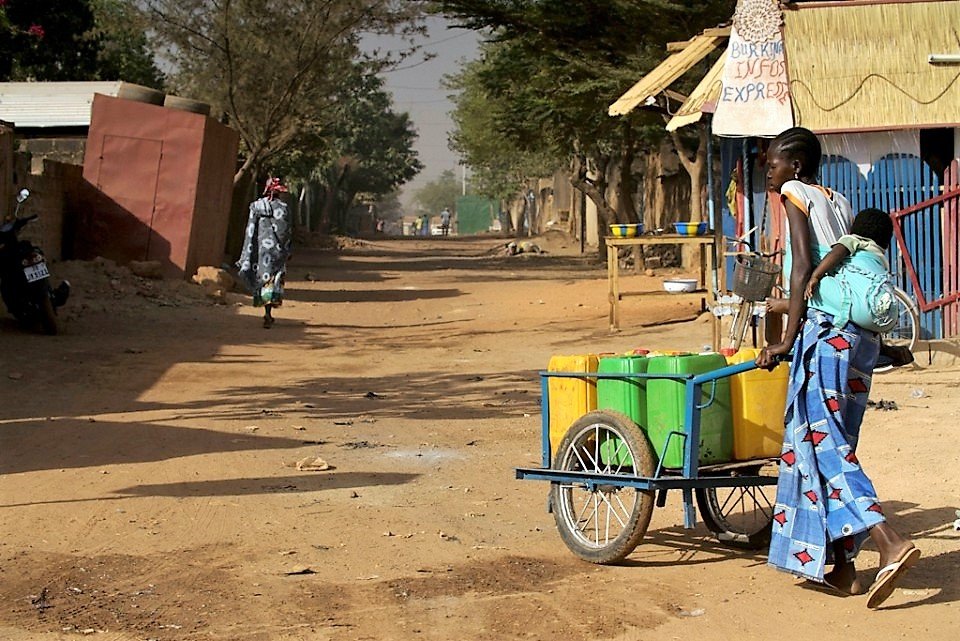
Woman pulling cart loaded with water drums
It is not a question of elevating the role of women, which in any society is obvious. The case of the Burkinabé woman is a worthy example of the practice of the culture of limitless effort.
To give you a feel for the situation here, let us visualize a day in the life of Poko, a beneficiary of one of FAR’s projects. Poko, at age 27, has four children of her own and also cares for the three children of her husband’s first wife (called here a “co-wife”), who was accused of witchcraft and expelled from the family clan.
Poko, orphaned by her father and living in foster care like a “Cinderella” in charge of a paternal uncle, was not schooled and was given in marriage as soon as she turned 16. Legally, a woman cannot marry in Burkina until the age of 18 (20, for young men). Yet, barring opposition from the parents or the girl traditional early marriage is socially as valid as legal marriage and is still present in Burkina especially in rural areas. In most cases, like Poko’s, the girls do not oppose the practice due to ignorance of the possibility – a consequence of illiteracy,
Poko gets up every day at dawn long before the rooster crows, which is not metaphorical as roosters still awaken the population here, to begin their daily routine of survival. If Poko is “lucky” enough to have a daughter (not a son), old and strong enough to carry a 20-liter jerry can of water, she will have to wake her up to go to the nearest well, which in most cases is a few kilometers away. But, if she doesn’t have a capable daughter, she’ll have to fetch the water herself.
Poko, like most of Rimkieta’s population, lives in a house (which is really more an adobe hut than a house) with one or two small rooms, without water or electricity, with an external latrine-type “hole in the ground” and a wood stove in the patio as a kitchen.
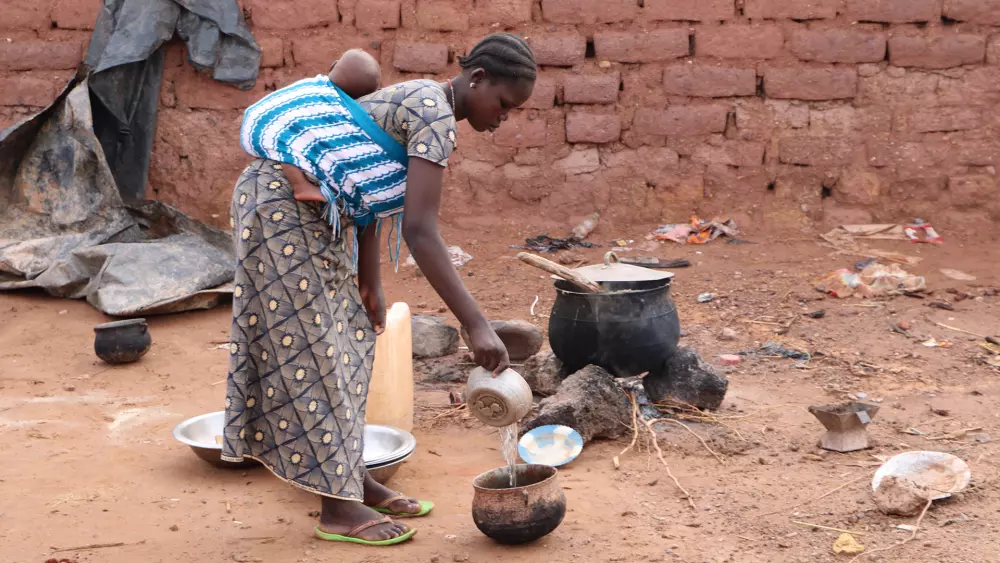
Wood stove outside the house as a kitchen. Photo: Sam Mednick TNH
Carrying the youngest child on her back, she will collect the firewood necessary to heat the water so that the husband and children can wash when they wake up. With the same fire, she will reheat the tô sauce – Burkina’s national dish (a ball of millet, sorghum or corn) – left over from the previous night’s dinner, which she must distribute as equally as possible among the children after the husband has eaten. What remains will be for her.
When three of the five sons (her own and those of the exiled “co-wife”) that Poko has managed to enroll have left for school, she will take the pick she carries every morning to a plot of land some 3 kilometers from her home.
Always with the little one on her back and holding the hand of the preceding brother who was obligated by the arrival of the youngest to learn to walk early, she digs – under a scorching sun – the sand that she will sell to the manufacturers of adobe bricks for construction.
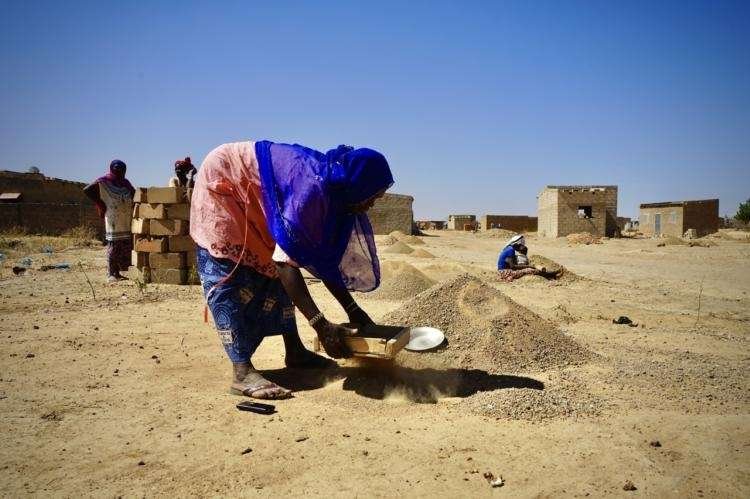
Digging earth to extract sand and gravel under a scorching sun for a livelihood to meet the needs of the family. Photo: joursdafrique.org
The fact that Poko has “prioritized” the schooling of boys is explained by the fact that girls have never had the same rights as boys. In Burkina, 32% of girls do not even attend primary school. Deprived of basic education and with minimal family culture in favor of education, more than 52% of young women between 15 and 20 years of age are illiterate. Only six percent of women have completed tertiary education. Only 35% of women have a functioning bank account.
Girls are considered alien to their own families because they are, symbolically, “property” of their future husband from birth. Why, then, would a girl study if, in order to survive, she will end up marrying to meet the needs of a man? In Burkina, 10% of young women between the ages of 20 and 24 married before the age of 15, and more than 50% before the age of 18. Globally, every 2 seconds, yes, every 2 seconds, a girl is married. Every year, 12 million girls are married somewhere in the world, which means 33,000 girls each day: one girl every 2.5 seconds (source UNICEF).
The subjugation of women can reach dramatic levels. I remember well the story of one of the mothers of a FAR grant student. While at home washing the children’s clothes, she saw the police arrive with an arrest warrant for her husband for an alleged motorcycle theft. As the husband was not at home, they tried to call him, but his phone was off. Then, the police decided to arrest her (she was the youngest of the three wives of the man in question) as a bargaining chip, leaving the other two the task of alerting the husband to go to the police station. Only then would they release the woman after arresting him. The arrest of that poor woman lasted ten days. In the end, she was released without her husband having presented himself to the police.
Getting back to Poko’s story, what she has managed to sell by the end of the day will determine whether the sauce, eternal accompaniment to the tô that will once again be their dinner, has more or fewer nutrients.
As malaria, typhoid, and dengue fever are common endemic diseases of the Burkinabé population, Poko will often have a sick family member for whom she will have to buy medication, limiting yet another day the tô sauce to what results from cooking some native leaf.
I refer the tô as dinner rather than lunch because it is eaten here only once a day, at dinnertime. In the morning, the leftovers from the previous night are finished and, by noon, the mother must provide what they call “pocket money” so that the children can have a drink from a street stall. The responsibility for nurturing offspring also falls on the woman, as the father rarely participates in any part of this whole process of feeding the family.
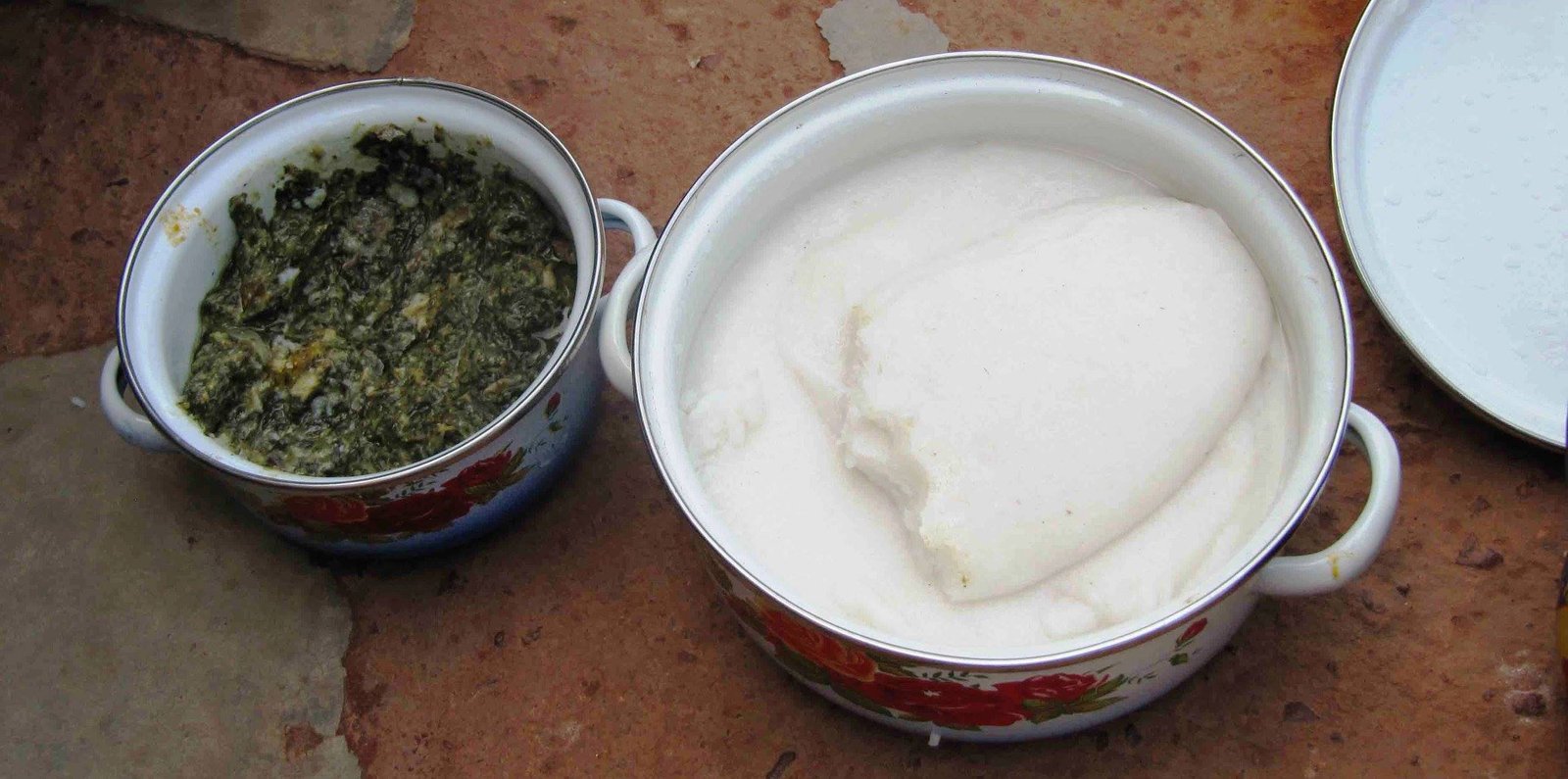
Tô dish with badenda sauce (native leaf)
On her way home, Poko will stop at a corn stall to buy “a plate” (the sales unit is the “plate” – more or less three kilograms) that she will take to grind. At night, after having heated water again for washing the children, and having cooked and served dinner, she will proceed to wash by hand everyone’s clothes.
Once these very demanding chores of the home are finished, by lamplight, Poko will dedicate herself to putting in small plastic bags the corn she has ground. Every morning, on the way to the area where she digs up sand, she sells these packets of flour, which she carries in a container on her head. She spares no effort to take care of her family’s needs – without any help from her husband, as I mentioned.
When she finishes bagging the flour for the next day’s sale, Poko will lie on the floor, a plastic mat as a mattress, sharing space with most of the children, to rise the next day at four in the morning, as she does every day, regardless of the day of the week.
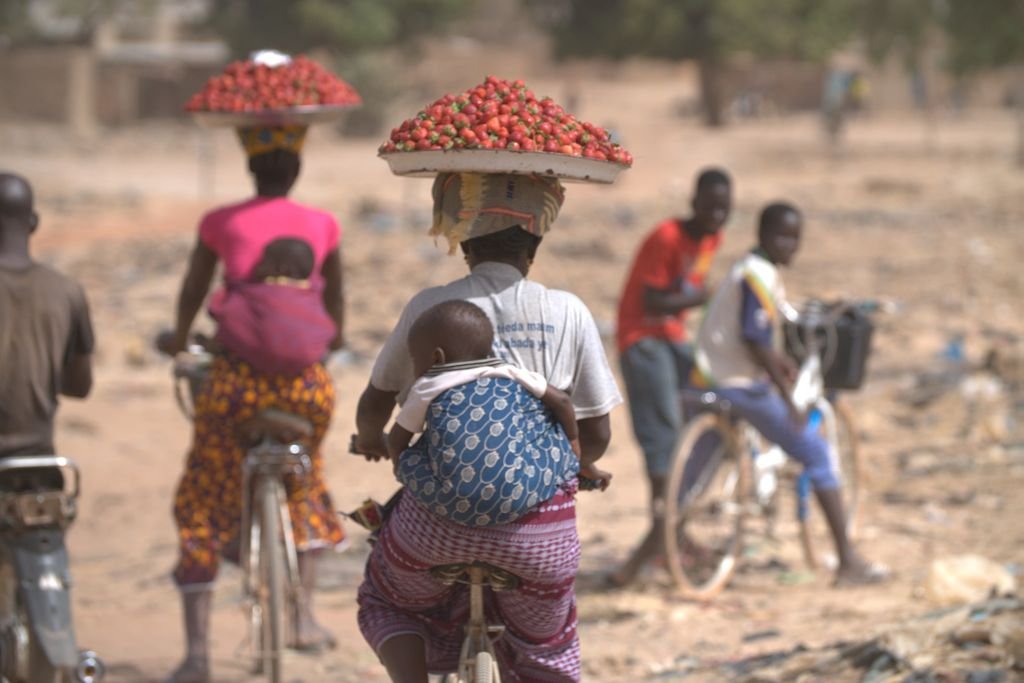 Poko’s is just one example of a day in the life of the millions of women who share her situation. Lives in which the value of tireless effort – manifested in the ability to overcome obstacles with discipline, perseverance, and courage – acquires its full magnitude.
All of this is carried out with exemplary dignity, and with the best of the smiles with which the Burkinabé woman faces with persevering effort the great difficulties with which she is faced. This sustained effort and adaptation is now called resilience.
The reality of the Burkinabé woman is so cruel that Poko’s daily story might seem like an exaggeration. Yet, my years of experience in Rimkieta confirm to me that, unfortunately, it is a faithful description of what happens. Despite some progress in recent years, the majority of Burkinabé women are still marginalized and are not taken into account in decision-making processes within the family. Thus, their absence from participation at the local or national level does not even bear mention.
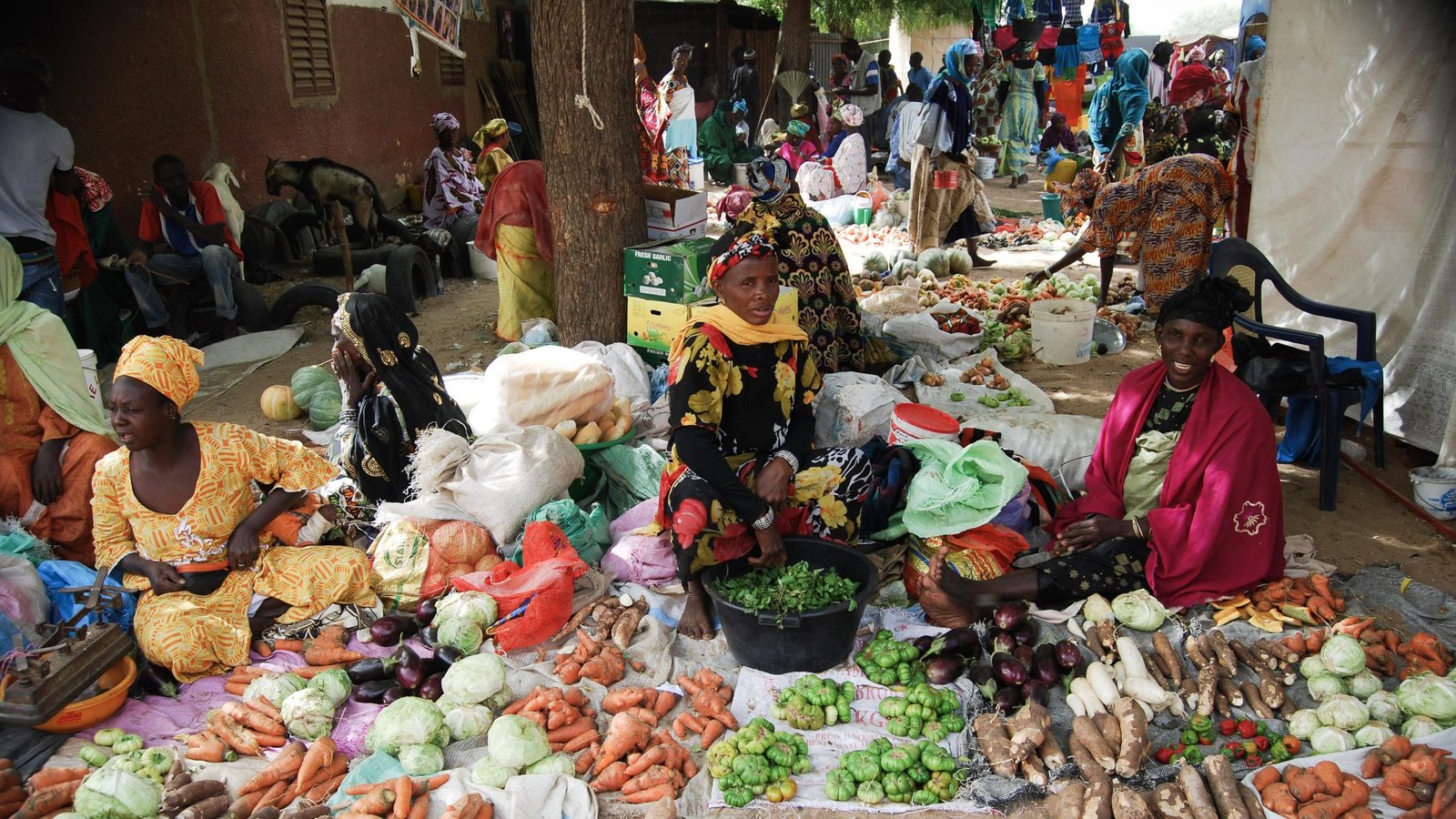
Women selling fruit and vegetables in the market. Photo : O’Gleman Média / Geneviève O’Gleman
Raising a family is not easy and never has been. I would go so far as to say that we are currently living in a time when, globally, the obstacles are even greater than in other times. In the particular circumstances of Burkinabé women and of those in many other neighboring and non-neighboring countries, the challenge is even greater, and the effort required to meet it is infinitely greater.
It is therefore no coincidence that FAR’s mission statement reads “women and children” rather than placing children before women, as is the norm. Children naturally stimulate compassion. Yet, for us, women are the priority because effort, when shared, becomes less effort. In addition, any relief for them serves justice and favors their children and their entire family nucleus.
Our ability to walk hand in hand with so many women beneficiaries of FAR projects, accompanying them without pulling them, is made possible by the other side FAR coin – the hundreds of “Friends of Rimkieta” who are the fuel and key pieces of the machinery of this social endeavor.
FAR’s mission is twofold. On the one hand, to alleviate material, psychological and cultural deficiencies in Rimkieta, one of many corners of what we can call the “fourth world”. Also, to stimulate awareness and generosity among all the “first world” people who cross our path. This requires austere, rigorous and transparent management, which allows us to appeal to their generosity, fruit of their effort and perseverance, to sustain the projects of the FAR.
The difficulties of the times in which we live, in a society where neither effort nor perseverance, but rather ease, immediacy, consumerism and waste, are practically the only “values” held by a large part of younger generations, are enormous. May the living example of so many “Pokos” serve as a powerful tool to spread the value of effort!